
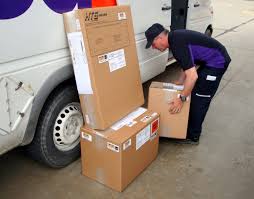
Supply chain managers face a constant battle to keep major retail partners happy. Just when you think your distribution network is running smoothly, a big-box retailer sends an updated routing guide with even narrower delivery windows. Meeting these aggressive schedules is no longer just a goal; it is a strict requirement for keeping your products on their shelves.
The pressure from top retailers is mounting across the board. Brands are struggling to keep up with these sudden shifts in vendor compliance.
According to recent industry research, “More than half of the CPG companies in our survey reported that retailers have tightened their on-time and in-full (OTIF) requirements by narrowing delivery windows and increasing fines for noncompliance.”
Eliminating these costly fines requires a fundamental shift in how you manage your freight. You have to move away from relying on unpredictable freight brokers and start working with established, asset-based logistics partners. By adopting retail-ready solutions, you can regain control of your shipping schedule and protect your profit margins.
Key Takeaways
- OTIF fines directly erode your profit margins and damage long-term relationships with major retailers.
- Asset-based 3PLs own their equipment, providing the real-world efficiency needed to guarantee delivery times.
- Strict warehouse compliance standards (like SQF and HACCP) prevent costly shipment rejections at the dock.
- Integrating co-packing directly with your warehousing partner eliminates transit delays and keeps products shelf-ready.
The Hidden Costs of Retail Delivery Fines
On-Time In-Full (OTIF) is a strict performance metric used by retailers to measure how often suppliers deliver the exact requested amount of product at the exact scheduled time. When you miss these tight targets, retailers issue chargebacks. These penalties are designed to force suppliers into compliance, but they can quickly drain your quarterly profits if your logistics network is flawed.
The financial penalty for missing a delivery window is severe. Major retailers mandate that suppliers are subject to fines of 3% of the value of the goods if they fail to meet OTIF rules. If you ship high volumes of consumer packaged goods, a 3% penalty on a single late load can wipe out your margin for that entire shipment.
To protect your profit margins from these aggressive chargebacks, you need more than just a transportation broker. You need a partner with physical control over the supply chain. Partnering with Mississauga logistics companies that are established and asset-based ensures your freight is handled with precision. This proactive approach gets your products to the shelf on time and in full.
Why Major Retailers are Tightening the Rules
Large retailers are not increasing delivery fees just to be difficult. They are protecting their own operations, distribution centers, and stock levels. When a truck arrives late, it creates a massive traffic jam at the receiving dock, forcing retail workers into costly overtime and delaying the movement of goods to the sales floor.
Empty shelves quickly lead to frustrated consumers who simply walk out and buy a competitor’s product elsewhere. The US food retail industry loses an estimated $15–20 billion in sales every year because items are out of stock or otherwise unsaleable.
This massive financial loss falls back on the vendor’s shoulders. Retailers expect suppliers to use standardized, reliable execution to keep those shelves perfectly stocked. If your supply chain is not capable of meeting these strict compliance demands, the retailer will simply give your shelf space to a competitor who can.
Asset-Based 3PLs vs. Freight Brokers: Securing Delivery Reliability
The core difference between an asset-based 3PL and a freight broker comes down to physical control. Asset-based providers physically own and maintain their own trucks, trailers, equipment, and warehouses. Freight brokers, on the other hand, are strictly middlemen who match your freight with third-party carriers using load boards.
Relying on a middleman creates dangerous blind spots in your distribution strategy. When you use a broker, you surrender direct communication with the actual driver handling your goods. This increases the risk of unannounced delays, damaged pallets, and missed delivery appointments.
Asset-based reliability gives you the control needed to scale up during seasonal peaks without sacrificing your OTIF scores. Because they own the trucks, asset-based companies can pivot quickly to solve routing issues instead of waiting for a third-party dispatcher to respond.
| Feature | Asset-Based 3PL | Freight Broker |
|---|---|---|
| Equipment Ownership | Owns trucks, trailers, and warehouses directly. | Owns no physical equipment; acts as a middleman. |
| Communication | Direct line to dispatchers and warehouse managers. | Relies on third-party carriers to relay information. |
| Quality Control | High visibility and standardized handling procedures. | Variable quality depending on the outsourced carrier. |
| OTIF Reliability | High. Can adjust resources internally to meet demands. | Lower. Subject to market availability and carrier whims. |
Many vendors gain back control by using a Dedicated Fleet model through their 3PL. This gives you the branded trucks and guaranteed capacity of an in-house private fleet, combined with the outsourced ease and lower overhead of an asset-based partner.
Defending Your Margins with Strict Compliance Standards
Handling sensitive, high-value freight comes with a unique set of challenges. If you operate in the Food & Beverage or Health & Beauty sectors, your products require exact temperature controls and pristine handling. A retailer will reject an entire truckload if a single pallet shows signs of damage, pest activity, or improper labeling.
This is why holding strict industry-standard certifications is non-negotiable for your warehousing partner. Certifications like GFSI (Global Food Safety Initiative), SQF (Safe Quality Food), and HACCP (Hazard Analysis Critical Control Point) prove that a facility follows rigorous safety protocols. If your 3PL does not maintain these standards, you are gambling with your product’s safety.
A logistics partner with precise inventory management and active regulatory compliance acts as your final line of defense. They conduct thorough outbound inspections to catch torn stretch wrap, crushed boxes, or barcode errors before the trailer is ever sealed. Stopping these errors at the dock prevents costly shipment rejections at the retail distribution center.
Streamlining the Supply Chain with “Retail-Ready” Co-Packing
“Retail-ready” refers to products that arrive at a store or distribution center fully prepped for immediate display or sale. This often requires complex co-packing, kitting, or custom assembly. Retailers have highly specific packaging configurations, and if your products arrive in the wrong format, they will be sent back at your expense.
Outsourcing your co-packing to your primary warehousing partner removes massive bottlenecks from your supply chain. When your goods have to leave your main warehouse, travel to a separate packaging facility, and then go to the retailer, you add days of transit time. Each extra stop increases the risk of delays and damage.
Integrating custom assembly with your transportation provider speeds up the entire process. Your 3PL can receive bulk products, kit them into promotional displays, shrink-wrap them to the retailer’s exact specifications, and load them directly onto their own trucks. This seamless transition ensures compliance and shaves critical days off your delivery schedule.
Overcoming Local Bottlenecks: The Mississauga Advantage
Location plays a massive role in your ability to hit tight OTIF targets. Mississauga is a strategic geographic hub because it sits right in the middle of Canada’s busiest supply chain corridor. Operating out of this region provides rapid, same-day access to major retail distribution centers throughout the Greater Toronto Area and beyond.
However, the local geography also presents serious hurdles for inexperienced carriers. The Greater Toronto Area is notorious for heavy traffic congestion, especially along the 401 corridor. Rising operational costs and complex city routing rules can easily derail a poorly planned delivery schedule, leading to missed appointments.
Partnering with a 3PL that possesses deep local market knowledge helps vendors navigate these specific regional hurdles. An experienced local team understands the optimal dispatch times to avoid rush hour bottlenecks. They know exactly how the local retail distribution centers operate, allowing them to guarantee on-time delivery despite the challenging local environment.
Conclusion
Eliminating aggressive retail delivery fines requires moving away from reactive shipping and embracing a proactive, asset-based logistics strategy. Continuing to rely on load boards and middlemen will only lead to further chargebacks and strained retailer relationships. You need a system built for consistency.
A successful retail distribution strategy relies on three core elements. You must demand strict warehouse compliance like SQF and HACCP, integrate your co-packing to speed up processing, and base your operations in a strategic geographic hub. Aligning these pieces ensures your freight is always shelf-ready.
Ultimately, choosing a reliable 3PL partnership protects your bottom line from unexpected penalties. When you consistently deliver on time and in full, you stop bleeding profits and begin strengthening your reputation with major retailers for the long term.