Shaving, waxing, and plucking can become frustrating when unwanted hair continues to return. Laser hair removal offers a longer-lasting alternative by targeting hair follicles with concentrated light energy. Although the treatment is often described as permanent, that description can create unrealistic expectations about the results. Some treated hair may never grow back, while other hair can eventually return thinner, lighter, or less noticeable. Understanding how the procedure works can help you determine whether it aligns with your needs, budget, and long-term grooming goals.
How Does Laser Hair Removal Work?
Laser hair removal uses a concentrated beam of light that is absorbed by pigment, called melanin, in the hair. The light energy is converted into heat, which damages the hair follicles responsible for producing new strands. This damage can delay future growth and prevent some follicles from producing hair again. Because the laser is attracted to pigment, treatment is generally most effective when the hair is darker than the surrounding skin. However, modern laser technologies and customized settings have made treatment possible for a broader range of skin tones.
The procedure does not treat every hair follicle during a single appointment because individual hairs grow in different cycles. Lasers work most effectively on hairs that are in the active growth phase, when the strand is connected to the follicle. Hairs that are resting or transitioning between phases may not respond during that session. Multiple appointments are therefore needed to target more follicles as they enter active growth. Treatment intervals vary depending on the body area, hair characteristics, and the provider’s recommendations.
Is Laser Hair Removal Actually Permanent?
The most accurate way to describe the results is permanent hair reduction rather than guaranteed permanent hair removal. The FDA has defined permanent reduction as a long-term, stable decrease in the number of hairs that regrow after a completed treatment regimen. This does not necessarily mean that every treated follicle will stop producing hair for the rest of a person’s life. Some hair may be permanently removed, but regrowth can still occur over time. Maintenance appointments may also be needed to preserve the desired level of smoothness.
When hair returns, it is often finer, lighter, and less dense than it was before treatment. Results differ significantly from one person to another because hair growth is influenced by genetics, hormones, age, medications, and the treatment area. Hormonal changes associated with pregnancy, menopause, or certain medical conditions may stimulate new hair growth. Facial hair can be especially responsive to hormonal changes and may require more maintenance than hair on some body areas. A provider should avoid promising complete, lifelong hair removal because no treatment can guarantee that outcome for every patient.
How Many Sessions Are Usually Needed?
Most people need a series of treatments rather than one appointment to achieve a noticeable reduction. The exact number depends on the thickness and color of the hair, the size of the treatment area, skin tone, laser type, and individual response. The American Academy of Dermatology notes that six or more treatments may be needed for lasting results in an area. Appointments are typically spaced several weeks apart so that new groups of actively growing hairs can be targeted. Your provider should create a schedule based on your skin and hair rather than using the same plan for every patient.
Commonly treated areas include:
- Underarms
- Legs
- Bikini area
- Back and chest
- Upper lip and chin
- Neck
- Arms
- Shoulders
Patients often notice less hair after the first few sessions, but completing the recommended series is important. Stopping early may leave many follicles untreated because they were not in the appropriate growth phase during earlier appointments. Even after the initial series, occasional touch-up treatments may be recommended. These sessions can target follicles that recover or hairs that develop because of hormonal changes. Treatment plans should be adjusted according to actual regrowth rather than a predetermined number of lifelong appointments.
What Factors Affect the Results?
Hair color plays a major role in how effectively laser energy reaches the follicle. Dark brown and black hairs usually respond well because they contain more melanin. Blond, gray, white, and some red hairs may respond poorly because they contain little of the pigment the laser is designed to target. The contrast between the hair and skin can also affect the provider’s choice of equipment and treatment settings. A consultation is essential for determining whether the available technology is appropriate for your characteristics.
Several additional factors may influence your results:
- The type and quality of the laser being used
- The provider’s training and experience
- The thickness and density of the hair
- The body area receiving treatment
- Hormonal conditions that encourage hair growth
- Consistency with the recommended appointment schedule
- Sun exposure before and after treatment
- Medications that affect the skin or hair
Skin tone does not automatically prevent someone from receiving laser hair removal. People with all skin tones may be treated, but the provider should have specific experience working with the patient’s complexion. Incorrect settings can increase the likelihood of burns, blisters, scarring, or changes in skin color. Patients with darker skin may require a laser and treatment approach designed to reduce the amount of energy absorbed by the surrounding skin. Choosing an experienced medical professional is, therefore, a central part of obtaining safer and more effective results.
What Should You Expect During Treatment?
Before the procedure, patients are commonly advised to limit sun exposure and avoid tanning. Waxing, plucking, and electrolysis may also need to be stopped because these methods temporarily remove the follicle that the laser needs to target. Shaving is often permitted or recommended because it leaves the follicle beneath the skin while removing hair above the surface. Patients should disclose medications, skincare products, medical conditions, recent tanning, and previous reactions to laser treatments. The provider may also perform a test spot to evaluate how the skin responds.
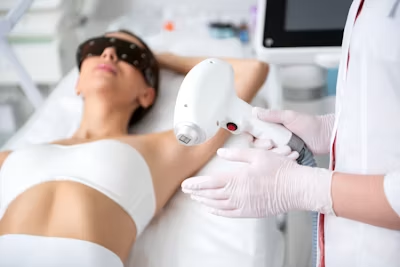
During treatment, the laser handpiece is moved across the skin while pulses of energy target the follicles. Patients may feel warmth, snapping, tingling, or a sensation similar to a rubber band touching the skin. Cooling technology, ice, or a topical anesthetic may be used to improve comfort. Small areas can be treated quickly, while larger areas, such as the legs or back, require more time. The total length of the appointment depends on the treatment area and the equipment being used.
Side Effects and Potential Risks
Temporary redness, swelling, tenderness, and irritation are common after laser hair removal. These effects may resemble a mild sunburn and usually improve relatively quickly. Applying a cool compress and following the provider’s aftercare instructions may help reduce discomfort. Patients should protect treated skin from sunlight and use sunscreen as directed. Scratching, aggressive exfoliation, and irritating skincare products may need to be avoided until the skin settles.
More serious complications are less common but can include blistering, burns, scarring, infection, and permanent changes in skin pigmentation. The skin may become lighter or darker, particularly when inappropriate equipment or settings are used. Risks may also increase when treatment is performed on recently tanned skin or by someone without sufficient training. In rare situations, laser treatment can cause increased hair growth around the treated area instead of reducing it. Receiving treatment from a qualified professional who understands laser safety and skin anatomy can lower, but not eliminate, these risks.
Frequently Asked Questions
Does laser hair removal eliminate all hair permanently?
Not always. It can produce a long-term reduction, and some hair may be removed permanently, but occasional regrowth and maintenance treatments are possible.
How long do the results last?
Results may last for months or years, depending on the individual. Hair that returns is often finer and less noticeable than it was before treatment.
Is laser hair removal painful?
Most patients experience brief warmth, stinging, or a snapping sensation. Comfort levels vary according to the treatment area, equipment, and individual sensitivity.
Can all skin tones receive laser treatment?
Yes, people with a wide range of skin tones can be treated. The provider must select suitable technology and settings and should have experience treating your particular complexion.
Does laser treatment work on blond or gray hair?
Results are generally less predictable on blond, white, gray, and some red hair because these colors contain less melanin. A consultation can help determine whether treatment is likely to be effective.
Can I shave between appointments?
Shaving is commonly allowed between sessions and may be recommended before an appointment. Waxing and plucking are usually discouraged because they remove the follicle being targeted.
Is there any downtime after treatment?
Most people can return to normal activities shortly after the procedure. Temporary redness, swelling, or sensitivity may occur and should be protected from heat and sun exposure.
Will hormonal hair growth return after treatment?
Hormonal changes can cause new or renewed growth, especially on the face. Patients with hormone-related hair growth may need ongoing maintenance or medical evaluation.
How to Choose a Laser Hair Removal Provider
Laser hair removal is a medical procedure involving powerful equipment, not simply a routine beauty service. The American Academy of Dermatology warns that burns, scarring, and permanent changes in skin color can occur when treatment is performed by an inexperienced person. Ask who will perform the procedure, what training that person has, and whether a qualified medical professional provides supervision. You should also ask which laser will be used and why it is suitable for your skin tone and hair type. A reputable provider should explain realistic outcomes, risks, preparation, aftercare, and the likely number of treatments without guaranteeing perfection.
Ultimately, laser hair removal can provide a major and lasting reduction in unwanted hair, but it should not be viewed as a promise that every strand will disappear forever. The best candidates understand that multiple appointments, responsible aftercare, and occasional maintenance may be necessary. Results are most satisfying when the treatment plan is personalized, and expectations are realistic from the beginning. A careful consultation can determine whether your hair color, skin tone, health history, and treatment goals make the procedure appropriate. By selecting an experienced provider and following the recommended schedule, you can improve your chances of achieving smoother skin and reducing the time spent shaving, waxing, or plucking.