Introduction
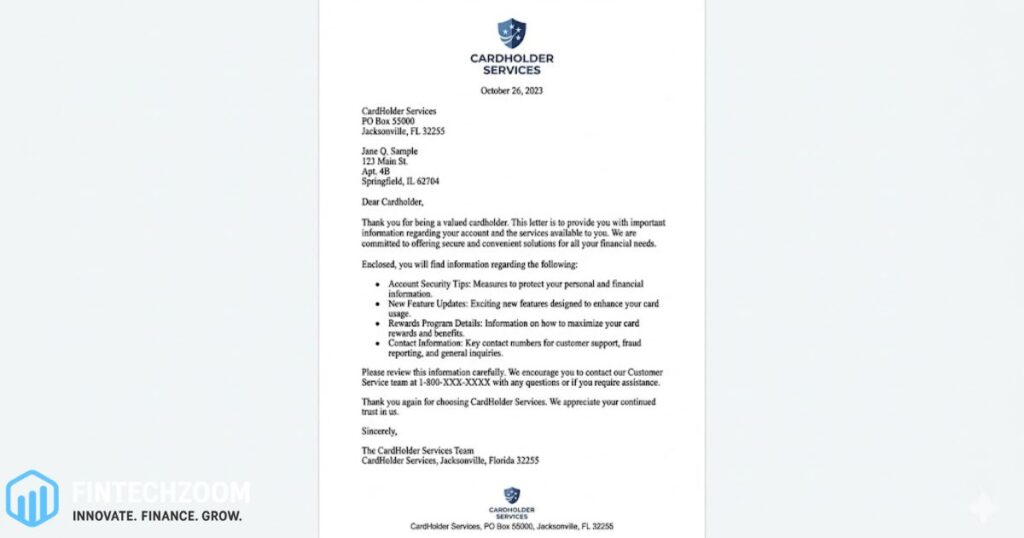
Receiving an unexpected official envelope can trigger immediate concern, especially when the return address is a vague P.O. Box. For many residents across the United States, a CardHolder Services letter Jacksonville Florida 32255 has appeared in their mailboxes, often lacking a specific bank logo or clear branding. This particular zip code and address have become a focal point for consumer confusion, as they are associated with both legitimate government-disbursed financial services and high-frequency phishing attempts.
Navigating this communication requires a blend of caution and investigation. While the term “Cardholder Services” is a generic descriptor used by many legitimate financial institutions, it is also a favorite pseudonym for scammers looking to lower interest rates or harvest personal data. Whether you have recently applied for unemployment benefits, changed your address, or simply found the letter among your daily junk mail, understanding the origin of this correspondence is vital. This article breaks down the primary entities operating out of this Jacksonville location and provides a step-by-step guide on how to verify the authenticity of the mail without compromising your financial security or personal identity.
Identifying the Primary Legitimate Sender
The most common legitimate source for a notice from this specific Jacksonville address is U.S. Bank, specifically regarding their ReliaCard program. Many state agencies use this prepaid debit card to distribute unemployment insurance, child support, or other government benefits. Because these cards are managed by a third-party processor, the mail often arrives under the name of a generic service department rather than the bank’s main retail branding. This is intended to protect privacy but frequently has the unintended side effect of looking like a fraudulent solicitation.
If you have recently interacted with a state agency for benefits, the letter might be a confirmation of an address change or a notification that a new card has been issued. These letters often contain essential security information or instructions on how to activate a replacement card. However, because the branding is so minimal, many recipients mistake these for junk mail. It is important to look for specific case numbers or references to state programs, which can help differentiate a genuine government-related financial notice from a random marketing effort or a predatory scam designed to look official.
Warning Signs of Fraudulent Correspondence
While U.S. Bank does operate out of this zip code, scammers frequently “spoof” legitimate addresses to gain a victim’s trust. A red flag for a fraudulent mailing is the inclusion of an “estimated credit card balance” or a “final notice” regarding debt settlement for an account you do not recognize. If the letter creates a sense of extreme urgency, such as threatening legal action or the immediate closure of an account, it is likely a scam. Fraudsters use these high-pressure tactics to bypass your critical thinking and force a quick phone call to their “service center.”
Another hallmark of a scam is a lack of specific detail. A legitimate bank letter will usually reference the last four digits of the specific card or account in question. If the letter is completely generic and asks you to call a number to “verify your identity,” be extremely wary. Authentic financial institutions will never ask you to provide your full Social Security number or your entire credit card number over the phone in response to a blind mailer. If the grammar is poor or the letterhead looks like a low-quality photocopy, these are clear indicators that the mail is not from a regulated financial entity.
Understanding the Debt Relief Trap
Some mailers from this Jacksonville area are not necessarily “scams” in the criminal sense but are predatory marketing for debt relief services. These companies often use the name of a generic department to make their offers look like official government or banking correspondence. They might offer to “lower your interest rates” or “consolidate your debt” to a fraction of the current balance. While these companies may technically exist, they often charge high upfront fees and can cause significant damage to your credit score by instructing you to stop paying your creditors.
Legitimate banks do not typically reach out via generic mail to offer debt settlement services under a vague name. If you receive an offer that seems too good to be true, such as a 50% reduction in your total credit card debt, it is almost certainly a marketing ploy. The Federal Trade Commission (FTC) has issued numerous warnings regarding these “Cardholder Services” pitches. If you are struggling with debt, the safest path is to contact your creditors directly using the number on the back of your card rather than calling a random number provided in a suspicious letter from a P.O. Box.
Verifying Official ReliaCard Notifications
If you suspect the letter is actually a legitimate notice regarding a government benefit card, there are safe ways to verify it. Instead of calling the number printed in the letter, visit the official website for the U.S. Bank ReliaCard or your state’s department of labor website. These sites list official contact numbers and mailing addresses for their service centers. Comparing the information on the official website to the details in the letter is the most effective way to confirm authenticity.
Additionally, you can check your online portal for the specific benefit program you are enrolled in. Most modern government systems will have a “communications” or “inbox” section where they store digital copies of any physical mail they have sent you. If the letter you received doesn’t appear in your digital history, it is a strong sign that the physical mail did not originate from the official agency. Taking these few minutes to verify through a secondary, trusted source can prevent the headache of falling for a sophisticated phishing attempt that uses a real mailing address to appear credible.
Security Best Practices for Mail Recipients
When dealing with sensitive financial mail, your first line of defense is your own caution. Never call a phone number provided in a suspicious letter. If you feel the need to call, look up the bank’s official customer service line independently. When you do speak to a representative, never provide your full Social Security number or card PIN. A legitimate bank representative may ask for a “member ID” or the last four digits of a card, but they will never ask for the sensitive codes required to make a transaction.
Another vital step is to monitor your credit report. If you receive a letter about a “change of address” or a “new card” and you did not request either, it could be a sign that someone has already stolen your identity and is trying to redirect your mail. In this case, the letter itself might be a legitimate security warning from a bank (like U.S. Bank) alerting you to the fraud. If this happens, you should immediately place a fraud alert or a credit freeze with the three major credit bureaus, Equifax, Experian, and TransUnion, to prevent further unauthorized accounts from being opened in your name.
Reporting Suspicious Financial Activity
If you have confirmed that the letter you received is a scam or a predatory solicitation, reporting it can help protect others in your community. You can file a complaint with the Federal Trade Commission through their online portal. This helps federal agencies track the addresses and phone numbers being used by scammers. Additionally, the United States Postal Inspection Service (USPIS) handles cases involving mail fraud. Since these letters are arriving via the physical mail, they fall under the jurisdiction of postal inspectors who can investigate the P.O. Box in Jacksonville.
For residents specifically in Florida, the State Attorney General’s office also maintains a consumer protection division that tracks these types of scams. Reporting the incident to them ensures that local authorities are aware of the surge in “Cardholder Services” mailers. Even if you didn’t lose any money, your report provides valuable data that can lead to the shutdown of fraudulent call centers. Staying proactive not only keeps your finances safe but also contributes to a larger network of consumer defense against increasingly clever financial crimes.
Managing Your Personal Information
In the digital age, your physical mailbox remains a target for data harvesters. To reduce the amount of suspicious mail you receive, consider opting out of “pre-screened” credit offers. This can be done through the official Opt-Out Prescreen website, which is the joint portal for the major credit reporting agencies. Reducing the amount of legitimate financial marketing you receive makes it much easier to spot a weird or suspicious letter because it will stand out from your regular, expected correspondence.
Finally, always shred any mail that contains your name and address along with any financial mentions, even if you think it is a scam. Scammers often engage in “dumpster diving” to find bits of information that can make their next phishing attempt more convincing. By disposing of these letters properly, you ensure that no one can piece together your financial habits or personal details. Managing your physical footprint is just as important as managing your digital one when it comes to long-term identity protection and financial peace of mind.
Comparison of Letter Types
| Feature | Legitimate (ReliaCard) | Scam / Phishing | Predatory Marketing |
| Sender Name | Cardholder Services / U.S. Bank | Generic “Card Services” | Debt Relief / Settlement |
| Urgency | Low (Confirmation of change) | High (Immediate action needed) | Moderate (Savings offer) |
| Specifics | Last 4 digits of account | No specific account info | “Estimated” balance |
| Request | Informational | Asks for SSN/Full Card # | Asks for upfront fee |
| Return Address | P.O. Box 551617, Jax FL | Varies (often spoofed) | Often a private mail drop |
FAQs
Is P.O. Box 551617 in Jacksonville, FL a real address?
Yes, this specific P.O. Box is used by U.S. Bank for their ReliaCard program. If you are receiving government benefits via a prepaid card, mail from this address is likely legitimate.
Why doesn’t the letter have a bank logo on it?
Many third-party card processors use “blind” envelopes to protect the privacy of the recipient, ensuring that neighbors or mail handlers do not know you are receiving specific government benefits or unemployment insurance.
Should I call the 800-number in the letter?
Only if you can verify it on the official website of the card issuer. It is always safer to call the number on the back of your actual card or a number found on a verified “.gov” or “.com” bank website.
Can I ignore the letter if I don’t have a ReliaCard?
If you don’t have a card, the letter could be a marketing scam or a sign of identity theft. You should check your credit report to ensure no unauthorized accounts have been opened in your name.
Conclusion
Receiving a CardHolder Services letter Jacksonville Florida 32255 is a common experience that requires a measured response. While it is easy to become alarmed, most legitimate mail from this address is simply a standard administrative notice from U.S. Bank regarding prepaid benefit cards. The lack of branding is a common industry practice for these specific types of accounts, intended to maintain a level of discretion for the cardholder. However, because scammers are aware of this address’s legitimacy, they often mimic the style and location to catch consumers off guard.
The key to staying safe is to never act on impulse. By cross-referencing the information with official government websites and your own bank’s records, you can quickly determine the nature of the correspondence. If the letter is an offer to settle debt or a demand for personal data, treat it with extreme skepticism. On the other hand, if it relates to a benefit card you are currently using, it may contain important updates about your account security. By maintaining a high standard for verification and practicing good mail hygiene, you can effectively manage these communications and protect your financial identity from the various threats that circulate through the postal system.