
Introduction
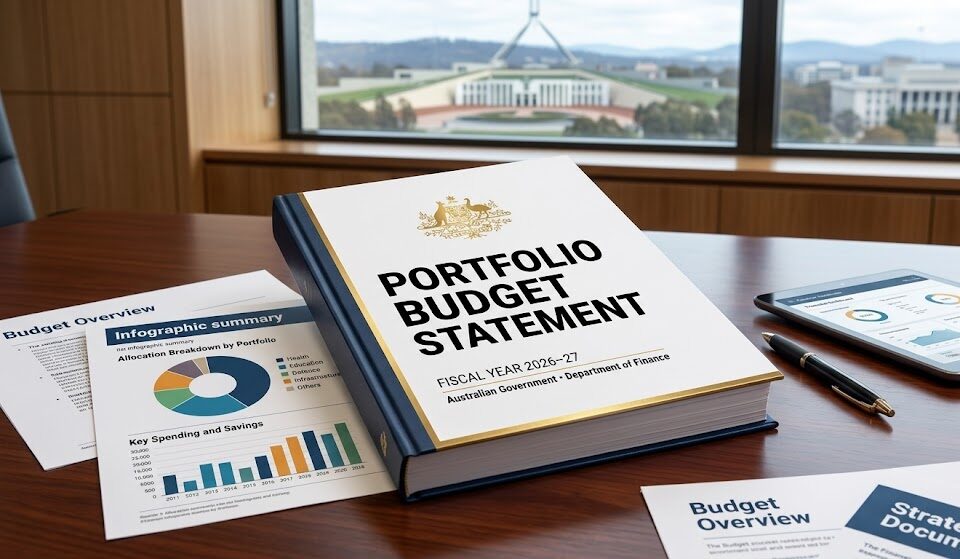
The mechanism of modern governance relies heavily on the clear communication of financial intentions and the subsequent tracking of performance. Central to this process is the portfolio budget statement, a comprehensive document designed to bridge the gap between high-level appropriation bills and the practical operations of government agencies. These documents serve as an essential roadmap for legislators and the public, detailing how specific departments intend to utilize the funds allocated to them during the fiscal year. Without such detailed breakdowns, the sheer scale of national spending would remain opaque and difficult to scrutinize.
By providing a structured look at planned expenditures, the portfolio budget statement ensures that every dollar is tied to a specific outcome or program. This level of detail is not merely a matter of bookkeeping; it is a fundamental requirement for democratic accountability. It allows for a rigorous examination of whether the government’s stated priorities align with its actual financial commitments. As global economies face increasing pressure to optimize public spending, the role of these detailed financial disclosures has become more critical than ever, offering a transparent view into the machinery of state funding and service delivery.
The Framework of Agency Accountability
The structural integrity of public finance depends on the ability of individual departments to justify their existence through measurable results. At the heart of this justification is a rigorous planning phase where objectives are set against available resources. This process requires a deep dive into the historical performance of programs to determine if they continue to provide value for money. By documenting these expectations in a formal public record, agencies commit themselves to a set of deliverables that can be tracked by external oversight bodies. This formalization prevents the “mission creep” that often occurs when funding is granted without specific strings attached.
Furthermore, the framework emphasizes the relationship between inputs and outputs. It is not enough to simply state how much money will be spent; the documentation must explain what that spending is expected to achieve for the citizenry. Whether it is the number of hospital beds maintained or the kilometers of highway paved, these performance indicators provide the benchmarks against which success is measured. This creates a culture of responsibility within the civil service, as leaders know that their future funding levels may be tied to their ability to meet the targets established in their initial financial projections.
Aligning Strategic Goals with Appropriations
The translation of political promises into administrative reality happens during the alignment phase of the fiscal cycle. When a government announces its broader goals such as improving education or strengthening national defense those goals must be broken down into actionable line items. This alignment ensures that the high-level vision is supported by the necessary capital and operational funding. It acts as a filter, removing programs that no longer serve the current strategic direction while highlighting new initiatives that require immediate investment. This synchronization is vital for maintaining a coherent policy environment across multiple departments.
During this phase, financial officers must balance the competing demands of various sub-agencies. They must ensure that the allocation of resources is equitable and directed toward the areas of greatest need. This often involves difficult trade-offs, where funding for one project may be reduced to bolster another. The transparency provided by the formal disclosure of these choices allows for a more informed debate within the legislature. It ensures that when representatives vote on a budget, they are doing so with a full understanding of the specific trade-offs and priorities that have been set by the executive branch.
Enhancing Legislative Scrutiny and Debate
One of the most important functions of detailed financial reporting is to empower the legislature to perform its oversight role effectively. During budget hearings, representatives use these documents to question department heads about their spending habits and program effectiveness. The granular data provided allows for a level of questioning that would be impossible with a simple summary. Legislators can drill down into specific programs to identify inefficiencies or areas where the public interest might not be fully served. This active scrutiny is a check against executive overreach and administrative waste.
Moreover, this process fosters a more informed public discourse. Journalists, researchers, and advocacy groups rely on these detailed disclosures to analyze government trends and hold officials accountable. By making the data accessible and standardized, the government lowers the barrier to entry for civic participation. When the public can see exactly where their tax dollars are going, they are better equipped to participate in the democratic process. This feedback loop between the government, the legislature, and the public is what ultimately drives improvements in the quality and efficiency of public services over the long term.
Risk Management and Contingency Planning
No financial plan is immune to the volatility of the real world. Economic shifts, natural disasters, or global crises can quickly render a static budget obsolete. Therefore, effective financial documentation must include a section dedicated to risk assessment. This involves identifying potential threats to the successful delivery of programs and outlining the steps that will be taken to mitigate those risks. By anticipating these challenges, agencies can build a more resilient financial structure that can withstand unexpected shocks without compromising essential services.
Contingency planning also involves the identification of “flexible” funding areas that can be redirected in an emergency. This proactive approach to resource management ensures that the government is not caught off guard by changing circumstances. The documentation provides a clear trail of how these risks were identified and what the planned response was, which is invaluable for post-crisis audits. It demonstrates that the agency is not just spending money, but is also managing a complex portfolio of responsibilities with a keen eye on the future. This forward-looking perspective is a hallmark of sophisticated public financial management.
Performance Metrics and Outcome Evaluation
The move toward outcome-based budgeting has transformed how government success is defined. Rather than focusing solely on how much was spent, the emphasis is now on what was actually accomplished. This shift requires the development of sophisticated performance metrics that can capture the qualitative impact of government interventions. These metrics are integrated into the financial reporting process to provide a holistic view of agency health. For instance, an environmental agency might track the reduction in carbon emissions alongside its operational costs to demonstrate its overall effectiveness.
Evaluation is an ongoing process that extends far beyond the initial budget release. Mid-year reviews and end-of-year reports compare the actual results against the targets set in the initial statement. This constant monitoring allows for real-time adjustments to be made if a program is underperforming. It also provides a wealth of data that can be used to inform future spending decisions. By institutionalizing this cycle of planning, acting, and evaluating, the government can ensure that its resource allocation is always grounded in evidence rather than intuition or political convenience.
Technological Integration in Fiscal Reporting
The digital revolution has significantly altered the way financial data is compiled and shared. Modern reporting now utilizes integrated software systems that allow for real-time tracking of expenditures across multiple departments. This technological shift has made it easier to produce highly detailed and accurate documents in a fraction of the time it once took. Furthermore, the use of open-data formats allows the public to download and analyze budget information using their own tools, further enhancing transparency and the potential for independent oversight.
Interactive dashboards and visualization tools are also becoming a standard part of the fiscal disclosure process. Instead of wading through hundreds of pages of static text, users can now navigate through charts and maps that highlight the most important data points. This makes the information more accessible to a non-technical audience, ensuring that the benefits of transparency are shared by all citizens, not just financial experts. As technology continues to evolve, we can expect even greater levels of integration, with artificial intelligence potentially being used to identify anomalies or suggest more efficient ways to allocate public resources.
Long-Term Sustainability and Fiscal Health
A primary concern of any responsible government is the long-term sustainability of its financial commitments. While a single fiscal year is the standard reporting period, the implications of spending decisions often span decades. Detailed financial statements must therefore account for the long-term costs associated with current programs, such as pension obligations or infrastructure maintenance. By including these multi-year projections, the government provides a more accurate picture of the nation’s fiscal health and its ability to meet future challenges.
This focus on sustainability helps to prevent the accumulation of hidden debts that could burden future generations. It encourages a more disciplined approach to spending, where new initiatives are only launched if they can be funded over the long term. This intergenerational equity is a core principle of sound public policy. By being transparent about the long-term costs of today’s choices, the government builds credibility with international markets and its own citizens. This transparency is the foundation upon which a stable and prosperous economy is built, ensuring that the state remains a reliable provider of services for years to come.
Comparison of Budget Components
| Component | Purpose | Focus Area |
| Appropriation Bill | Legal authority to spend | Total funding limits |
| Portfolio Budget Statement | Detailed program breakdown | Resource allocation & outcomes |
| Annual Report | Historical performance review | Actual vs. Planned results |
| Mid-Year Update | Adjusting for economic shifts | Revised forecasts |
FAQs
Is the portfolio budget statement a legally binding document?
While the document itself is not the law, it provides the necessary detail for the Appropriation Bills which are legally binding. It serves as an authoritative explanation of how the legally granted funds will be used.
How often are these statements updated?
They are primarily released once a year during the main budget announcement. However, if there are significant changes to the budget during the year (such as an Additional Estimates process), updated versions or supplements are typically produced.
Can the public access these documents easily?
Yes, in most modern democracies, these documents are published on official government websites and are available to any citizen, journalist, or researcher interested in reviewing how public funds are managed.
Conclusion
The portfolio budget statement stands as a vital pillar of public administration, ensuring that the complex task of national budgeting remains transparent and accountable. By breaking down vast sums into manageable, program-specific details, it provides the clarity needed for effective oversight and informed public debate. This document is much more than a collection of financial tables; it is a declaration of a government’s priorities and a commitment to achieving specific results for its people.
In a world where the demand for public services is constantly growing, the ability to track and optimize spending is indispensable. The rigorous process of preparing and scrutinizing these statements drives efficiency, discourages waste, and fosters a culture of performance within the public sector. Ultimately, the strength of a nation’s fiscal health is reflected in the quality of its financial disclosures. By maintaining high standards for the portfolio budget statement, a government demonstrates its respect for the taxpayer and its dedication to the long-term prosperity of the country.