
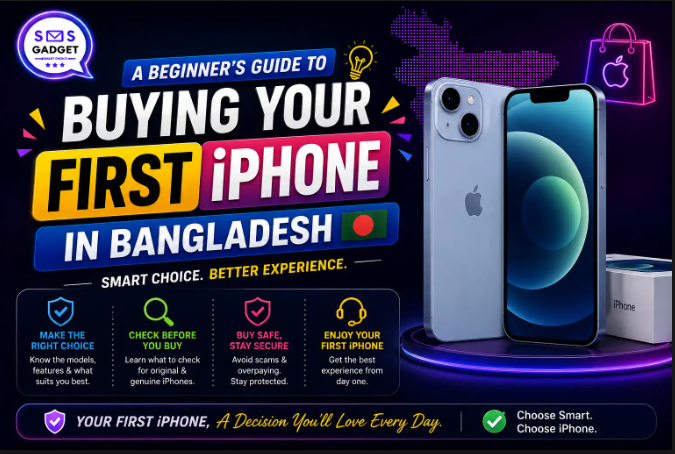
Getting a first iPhone might sound scary for various reasons, new terminology, no official Apple Store in Bangladesh, and different prices in different stores. Nothing to be afraid of! In this guide, we explain every single thing you need to know in a step-by-step manner with the assumption that you know absolutely nothing about iPhones.
Before You Buy — Get These 3 Basics Right
Set a Realistic Budget First
Thinking in simple bands makes this easier, entry-level for basic everyday use, mid-range for a comfortable all-rounder, and flagship for anyone who wants the very best camera and performance. Checking the latest iPhone Price in Bangladesh for each band helps turn these bands into real numbers before browsing models.
New, Used, or Refurbished — Which Fits a First-Timer Best
A new one is the simplest and safest starting point, with full warranty and zero history to worry about. A refurbished item, bought from a trustworthy seller, offers real savings with much of that same peace of mind. Used can also work, but it asks a bit more of a first-time buyer in terms of verification and is worth trying only with some caution.
Which Model Makes Sense for a First iPhone?
For most beginners, a standard current or previous-generation model covers everyday needs comfortably. Anyone leaning toward photography can step up to a Pro model, while budget-focused buyers can comfortably go one generation back and barely notice the difference day to day.
Common Apple Terms Explained (For Total Beginners)
Apple ID / Apple Account
An Apple ID is simply the personal account tied to an iPhone mobile; it’s what makes apps, photos, and messages all work together, and it’s the first thing to set up after turning the phone on.
iCloud
iCloud is Apple’s online storage space. Think of it as a safety net that automatically saves photos, contacts, and settings, so nothing gets lost even if the phone is ever replaced.
iOS, App Store, Face ID/Touch ID — Quick Glossary
iOS is simply the operating system that runs everything on an iPhone. The App Store is where all apps are downloaded from, safely and officially. Face ID or Touch ID is how the phone recognizes its owner instantly, using a face scan or fingerprint instead of typing a passcode every time.
Buying Safely — The Simple Version
-
Where Beginners Should Buy From?
Starting with an established, authorized Best iPhone Shop like SMS Gadget is the safest first move, with a proper warranty, a real invoice, and someone accountable if anything ever needs attention later.
-
The One Number to Check Before Paying — IMEI
Dialing *#06# on the phone instantly shows its IMEI number. This one number, checked before paying, is the single most useful two-minute habit a first-time buyer can build.
-
Why “Too Cheap” Is a Warning Sign, Not a Bargain?
A price that looks unusually low compared to everywhere else is rarely luck, it’s almost always a sign something’s off. For the full verification checklist, the “Official vs Unofficial” and “How to Check If Your iPhone Is Original” guides cover every detail in depth.
Setting Up Your iPhone for the First Time
Turning It On and Creating an Apple ID
The setup screen walks through creating an Apple ID automatically, just an email and a password, and the phone handles the rest.
Moving Contacts and Photos Over
Coming from an Android phone, Apple’s own “Move to iOS” app transfers contacts, photos, and messages across in just a few taps, making the switch far less stressful than it sounds.
Setting Up Face ID, a Passcode, and Find My iPhone
These three take only a few minutes together and immediately make the phone secure. Find My iPhone especially is worth turning on right away, since it’s the best protection if the phone is ever lost.
5 Things Every First-Time iPhone Owner Should Do in Week One
-
Turn On Automatic Backups
Enabling iCloud backup means photos and data stay safe automatically, without ever needing to think about it again.
-
Explore the App Store Safely
Sticking to the official App Store for every download keeps the phone completely safe from the kind of issues Android sideloading can sometimes bring.
-
Learn the Basic Gestures
Swiping down from the top-right opens Control Center, double-tapping the home indicator opens the App Switcher, and pressing the side and volume-up buttons together takes a screenshot, small habits that make daily use feel naturally fast.
-
Check Storage Plan and Battery Health Baseline
Peeking at Settings > Battery > Battery Health & Charging right away gives a starting baseline to compare against months later, which is genuinely useful to have on record.
-
Save Warranty and Purchase Details Somewhere Safe
Keeping a photo of the invoice and warranty card in a cloud folder means it’s never lost right when it’s needed most.
Common Beginner Mistakes to Avoid
- Skipping the IMEI check before paying
- Forgetting the Apple ID password (write it down somewhere safe)
- Buying based on price alone, ignoring the seller’s reputation
- Ignoring battery health when considering a used unit
Frequently Asked Questions
- What is the easiest iPhone to start with as a first-time user?
A standard current or previous-generation model is usually the easiest starting point, covering everyday needs without any unnecessary complexity. - Do I need an Apple ID immediately after buying an iPhone?
Yes, an Apple ID is needed right at setup to use the App Store, iCloud, and most core features from the very first moment. - Is a used iPhone a good choice for a first-time buyer?
It can be, as long as battery health and IMEI are both checked carefully first, new or refurbished from a trusted seller is usually the gentler starting point. - How do I move my data from Android to iPhone?
Apple’s free “Move to iOS” app transfers contacts, photos, and messages across in just a few simple steps.
Conclusion
Here the learning curve is truly short, since whatever seems to be new on the first day gets second nature to you within a week’s time. Just making sure you choose a reliable vendor and do the easy IMEI test prior to payment takes care of almost all that you need to know as a first-time buyer. For everyone else who wants to know more, the detailed buyer’s guide, warranty guide, and authenticity guide from this series are here.