
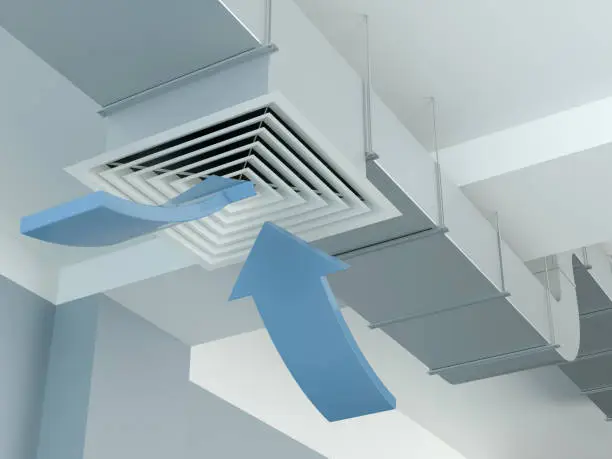
Maintaining proper airflow is essential in many commercial and industrial buildings, especially those that rely heavily on exhaust ventilation. Manufacturing plants, warehouses, commercial kitchens, workshops, and production facilities may remove large volumes of indoor air throughout the day. When that exhausted air is not replaced correctly, the building can develop pressure imbalances that affect comfort, ventilation, and equipment performance. Make-up air systems address this problem by supplying fresh outdoor air to replace the air removed by exhaust fans and other ventilation equipment. Properly designed make-up air cooling systems can improve airflow, support indoor comfort, and help a facility maintain more balanced operating conditions.
What Is a Make-Up Air System?
A make-up air system is designed to replace indoor air that is continuously or periodically exhausted from a building. Exhaust fans may remove air containing heat, fumes, smoke, odors, moisture, dust, or other unwanted contaminants, depending on the type of facility. As that air leaves, an approximately equal amount of replacement air must enter the building from somewhere. Without a dedicated system, outside air may be pulled through cracks, open doors, windows, or other uncontrolled openings. A make-up air unit provides a more organized and predictable way to introduce that replacement air.
The incoming air may also be filtered, heated, cooled, or otherwise conditioned before entering occupied areas. This helps facilities manage indoor conditions rather than allowing outdoor air to enter wherever building pressure happens to draw it in. Depending on the application, the system may distribute air directly into a room, through ductwork, or near areas where exhaust occurs. The design should account for exhaust volume, building size, occupancy, equipment, climate, and other operational factors. When properly sized, the system supports more controlled airflow throughout the facility.
How Exhaust Systems Affect Building Pressure
Every exhaust fan removes a certain volume of air from a building. When large exhaust systems operate without sufficient replacement air, indoor pressure can become lower than outdoor atmospheric pressure. This condition is known as negative building pressure. The pressure difference causes outside air to enter through any available openings in an effort to restore balance. Unfortunately, that uncontrolled infiltration can create drafts, uneven temperatures, and other operational problems.
Negative pressure may also make exterior doors harder to open or cause them to close unexpectedly. Air may rush through loading dock openings, wall penetrations, gaps around windows, or other unintended locations. In some buildings, excessive pressure imbalance can interfere with exhaust performance or combustion equipment operation. Maintaining proper building pressure is therefore an important part of ventilation design. A dedicated make-up air system helps replace exhausted air in a controlled manner and reduces the need for uncontrolled infiltration.
Make-Up Air Supports Consistent Air Movement
One of the primary benefits of make-up air is more predictable airflow. Instead of allowing air to enter randomly through gaps and doors, the system supplies replacement air at planned locations. This creates a clearer path between supply and exhaust points throughout the building. Proper airflow patterns can help move heat, odors, moisture, and airborne contaminants toward exhaust equipment more effectively. The result is a ventilation system that operates more consistently with its intended design.
Strategic air distribution is especially important in large industrial environments. Air supplied too far from exhaust points may not move through work areas as effectively as intended, while poorly positioned supply outlets may create uncomfortable drafts. Designers can use ductwork, diffusers, louvers, or direct-fired supply units to distribute replacement air based on facility needs. Airflow should complement existing exhaust systems rather than compete with them. Coordinating supply and exhaust volumes can create more stable indoor conditions.
Cooling Replacement Air Improves Comfort
Introducing outside air solves the problem of air replacement, but untreated outdoor air can create another challenge during hot weather. If large volumes of hot air are brought directly into a facility, indoor temperatures may rise, and employee comfort may suffer. This is where make-up air cooling systems can provide an important advantage. These systems condition incoming replacement air before distributing it throughout the building. Cooling the replacement air helps maintain ventilation requirements without introducing excessive heat into occupied areas.
Different cooling technologies may be used depending on the facility, climate, and required temperature conditions. In hot and dry climates, evaporative cooling can sometimes be incorporated into make-up air equipment to reduce incoming air temperature efficiently. Other applications may require mechanical refrigeration or a combination of technologies. The appropriate solution depends on factors such as humidity, outdoor design temperatures, airflow volume, and process requirements. Matching the cooling method to the application helps maintain both comfort and ventilation performance.
Benefits for Commercial and Industrial Facilities
Make-up air systems can support several aspects of facility operation beyond simply replacing exhausted air. Properly designed systems help establish stable airflow patterns and can reduce problems caused by excessive negative pressure. They may also improve comfort by reducing uncontrolled drafts and providing conditioned replacement air. In facilities with significant heat-generating processes, bringing cooler air into targeted areas can help create more manageable working conditions. The overall benefit depends on how well the system is coordinated with the building’s exhaust equipment.
Potential advantages include:
- More balanced building pressure
- Better control over incoming outdoor air
- Reduced uncontrolled drafts and infiltration
- Improved ventilation effectiveness
- More consistent indoor temperatures
- Better employee comfort
- Improved exhaust system performance
- More predictable airflow through work areas
These benefits can be especially important in facilities where ventilation equipment operates for long periods. Manufacturing plants, commercial kitchens, welding areas, paint operations, warehouses, and automotive facilities may exhaust substantial amounts of air during normal operations. In such environments, relying on cracks and doors for replacement air is rarely an ideal long-term strategy. Dedicated make-up air equipment allows facility managers to manage incoming airflow more intentionally. Proper design can also help reduce strain on other building systems.
Make-Up Air Can Improve Exhaust Performance
Exhaust systems need access to replacement air in order to move their rated airflow effectively. When a building becomes excessively depressurized, exhaust fans may have to work against greater resistance. This can reduce actual airflow and prevent ventilation equipment from performing as intended. Supplying adequate make-up air reduces this pressure imbalance and gives exhaust systems a more reliable source of replacement air. As a result, exhaust fans may operate closer to their designed conditions.
This relationship is especially important where exhaust is used to capture heat, smoke, fumes, or process contaminants. Poor airflow balance may allow unwanted air to spread beyond the intended capture area. A properly coordinated supply system can help direct air toward exhaust points while avoiding turbulence that disrupts capture. Engineers and ventilation professionals typically evaluate both supply and exhaust systems together when designing airflow solutions. Treating them as connected systems can improve overall ventilation effectiveness.
Placement and System Sizing Matter
A make-up air system must be sized according to the amount of air being exhausted from the facility. Supplying too little replacement air may leave the building under excessive negative pressure, while too much may create positive pressure or undesirable airflow patterns. Designers must consider all significant exhaust equipment that may operate at the same time. They should also account for doors, process equipment, natural ventilation, and other sources of air movement. Proper calculations are essential for establishing a balanced ventilation strategy.
Supply air placement is equally important. Air should enter locations where it can support desired circulation without creating strong drafts or interfering with exhaust capture. In some applications, make-up air is introduced near exhaust hoods or production zones. In others, a larger duct network distributes air throughout the facility. The best approach depends on building layout, ceiling height, employee locations, equipment placement, and ventilation objectives.
Maintenance Helps Maintain Airflow
Like other mechanical ventilation equipment, make-up air systems require routine maintenance to perform reliably. Filters can become clogged, fans can wear, belts can loosen, and intake openings can collect dirt or debris. Cooling components may also need periodic cleaning and inspection, depending on the system design. When airflow becomes restricted, the system may no longer provide enough replacement air to match exhaust demand. Regular maintenance helps prevent gradual performance losses that may otherwise go unnoticed.
Facility managers should monitor system operation for changes in airflow, noise, temperature, or building pressure. Doors that suddenly become difficult to open or areas that develop unusual drafts may indicate an airflow imbalance. Filters should be inspected and replaced according to manufacturer recommendations and operating conditions. Fans, motors, dampers, controls, and cooling components should also be included in preventive maintenance schedules. Consistent service supports reliable airflow and extends equipment life.
FAQ About Make-Up Air Systems
Why do buildings need make-up air?
Buildings need make-up air to replace air removed by exhaust fans and ventilation systems. Without sufficient replacement air, the building may develop negative pressure and uncontrolled outside air infiltration.
Does make-up air have to be cooled?
Not always, but cooling can improve comfort when large amounts of hot outdoor air enter a facility. The need for cooling depends on climate, occupancy, process conditions, and indoor temperature requirements.
Can a make-up air system improve exhaust performance?
Yes. Providing sufficient replacement air can reduce excessive negative pressure and help exhaust fans operate closer to their intended airflow capacity.
What happens if a building does not have enough make-up air?
Insufficient make-up air can cause drafts, difficult-to-open doors, reduced exhaust performance, uneven temperatures, and uncontrolled outdoor air infiltration. Severe pressure imbalances may also affect other building equipment.
How is a make-up air system sized?
System sizing is generally based on exhaust airflow, building conditions, operating schedules, ventilation requirements, and desired pressure balance. A qualified professional should calculate the appropriate supply volume.
Where is make-up air introduced into a building?
It may be supplied through ductwork, ceiling diffusers, wall louvers, or outlets located near specific production and exhaust areas. Placement depends on building layout and desired airflow patterns.
Building a More Balanced Indoor Environment
Effective airflow depends on maintaining a balance between the air leaving a building and the air entering it. Exhaust ventilation is necessary for many commercial and industrial operations, but removing large quantities of air without replacing it can create pressure and comfort problems. A properly designed make-up air system introduces replacement air in controlled locations and quantities. When cooling is included, incoming outdoor air can also be conditioned before reaching employees and production areas. This combination supports a more stable and comfortable indoor environment.
Make-up air cooling systems can be particularly valuable in facilities with high exhaust rates, significant process heat, or demanding ventilation requirements. Proper equipment sizing, strategic air distribution, effective controls, and routine maintenance are all essential to achieving reliable performance. Businesses should evaluate their supply and exhaust systems as parts of one overall airflow strategy rather than treating each component separately. Professional system design can help identify pressure imbalances and determine how much conditioned replacement air is required. With the right approach, make-up air systems can improve ventilation, support indoor comfort, and create more predictable airflow throughout large commercial and industrial facilities.