
These toolDay trading comes down to one thing: reading the market correctly before you act. Most traders who fail do not fail because of bad luck. They fail because they are trading blind, without any real framework for understanding what price is doing and why. That is where technical indicators come in.
s, including an AI trading indicator, won’t make you rich overnight, but they help you read market behavior with logic instead of relying on gut feeling.
Moving Averages (MA)
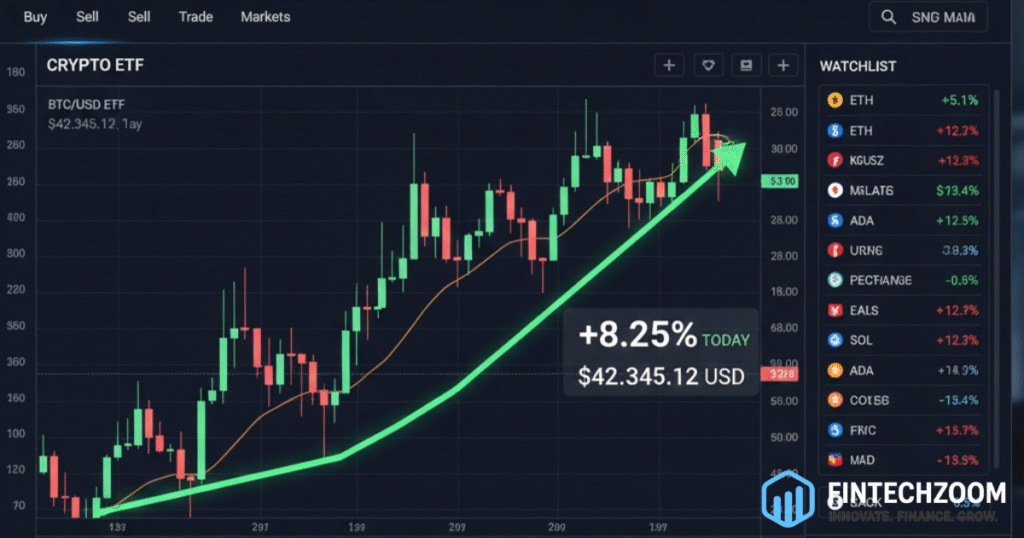
Price is noisy. Markets move too fast for the human eye to track. Moving averages act like a filter to clear the mess. Learn the Simple Moving Average and the Exponential Moving Average. To get the SMA, you just take the average closing price for whatever time period you choose. The EMA does the same thing but leans harder on recent prices, so it reacts faster to what is happening right now.
For intraday trading, short EMAs like the 9 or 21 are popular because they respond quickly. Price holding above the EMA usually means buyers are in control. Price dropping below it usually means sellers have taken over. When a short-term MA crosses a longer one, many traders treat that as a signal to enter or exit.
Relative Strength Index (RSI)
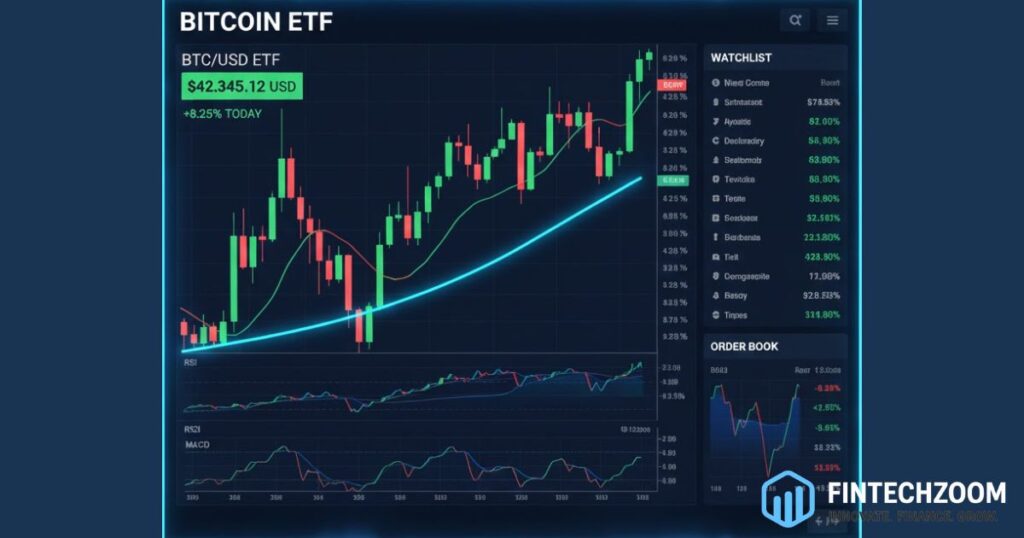
The Relative Strength Index tells you whether a stock is being pushed too far in one direction. It runs from 0 to 100. Above 70 and the asset is likely overbought. Below 30 and it is likely oversold.
In practice, RSI is useful for spotting exhaustion. If a stock has been climbing hard and RSI is sitting at 78, the move may be running out of gas. If it has been selling off and RSI dips under 30 and starts turning up, buyers might be stepping back in.
Do not use RSI alone. It gives off false signals constantly in strong trending markets. Pair it with price action and other tools.
Volume
Volume is the one indicator that does not lie. It shows you how many people actually participated in a price move. A big green candle on low volume is weak. The same candle on high volume means real money moved.
When a stock breaks out of a range and volume spikes at the same time, that breakout has backing. When it breaks out on thin volume, be careful. The move often fades quickly.
Watch for volume spikes at key price levels. They usually tell you something important is happening, even before you know what the news is.
VWAP (Volume Weighted Average Price)
VWAP stands for Volume Weighted Average Price. It calculates the average price a stock has traded at during the session, factoring in how much volume traded at each price. It resets every day at the open.
Institutional traders use VWAP as a benchmark. That matters to you because institutions move markets. When the price is above VWAP, the day is leaning bullish. Below it, bearish. Many traders use VWAP as a line in the sand for taking trades.
A straightforward approach: in a stock that is trending up, look for pullbacks to VWAP as potential entries. It often acts as a magnet that price returns to throughout the day.
Bollinger Bands
Bollinger Bands put a moving average in the middle and draw two bands around it based on standard deviation. When the market is calm, the bands squeeze tight together. When things get volatile, they widen out.
The squeeze is the setup most day traders watch for. When bands compress for an extended period, the market is coiling. Eventually, it breaks. The direction of that break is the trade.
Price repeatedly hitting the upper band can indicate a strong uptrend, not necessarily a reversal. Context matters. Do not assume a touch of the upper band always means sell.
MACD (Moving Average Convergence Divergence)
MACD tracks the relationship between two moving averages and shows momentum through a histogram. When the MACD line crosses above the signal line, momentum is shifting bullish. When it crosses below, momentum is turning bearish.
MACD watches two moving averages to show how much “push” a price has. If the MACD line crosses over the signal line, momentum is shifting bullish. If it crosses under the signal line, the momentum is turning bearish.The histogram is worth watching closely. When it is growing, momentum is building. When it starts shrinking even before a crossover happens, that can be an early warning that the move is weakening.
MACD is better for confirming a trade than finding one. Use it to validate what you are already seeing in price and volume.
Final Thoughts
The mistake most beginners make is using one indicator and treating it like a crystal ball. That never works. The real approach is confluence. You want multiple tools pointing in the same direction before you pull the trigger.
Say a stock is above VWAP, volume is picking up, RSI is at 58 and rising, and MACD just crossed bullish. That is a much stronger case for a trade than any one of those signals alone.
Start with one or two indicators and get comfortable with them. Tools like GainzAlgo V2 can help you better understand market signals. Add others gradually, track every trade, and refine what works in current market conditions.