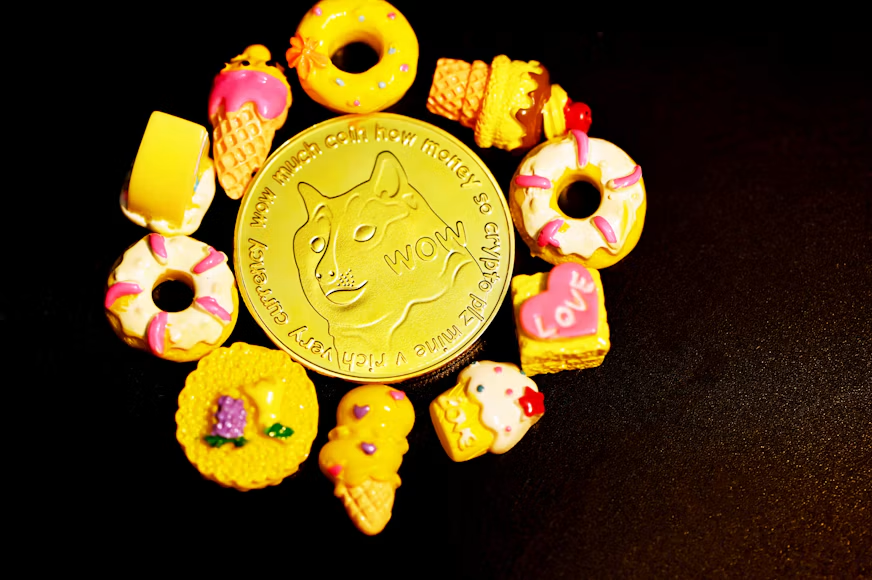
When a rising market gives way to months of losses, Dogecoin has more to contend with than a lower number on a screen. The excitement that brought people to the coin starts disappearing, taking potential buyers with it. Anyone reading a Dogecoin price prediction needs to consider that change in mood, because the crowd that celebrates a rally can behave very differently once making money stops looking easy. Dogecoin’s internet identity gives it lasting recognition, but recognition alone doesn’t keep bids arriving. A bear market tests the relationship between the story people enjoy and the money they’re still prepared to commit.
When the conversation goes quiet
In a rising market, a Dogecoin joke arrives with a tempting detail attached: somebody has just made money. People pass it on, others look up the coin, and some decide they want a place in the next rally. Take away those stories of gains and the joke has less work to do. The familiar dog still appears in people’s feeds, but an audience that enjoys a meme isn’t necessarily an audience reaching for its wallet.
The fast money looks for an exit
For a trader who bought Dogecoin expecting a quick gain, a long decline changes the reason for holding it. The opportunity they wanted has gone, while their money remains tied up in a losing position. They can sell and look elsewhere, or keep waiting for a recovery they cannot schedule. As more of these traders decide to leave, their sales reach a market with fewer newcomers willing to take the other side.
Bitcoin still sets the wider mood
Dogecoin has its own following, yet its market doesn’t operate in isolation. It can retreat alongside Bitcoin when traders cut exposure across crypto, with speculative coins taking a particularly hard knock as people become less willing to hold risk. A funny logo and a recognisable brand don’t insulate a position from this wider retreat. Dogecoin can amplify the move, although it doesn’t underperform Bitcoin on every occasion.
A thinner market leaves less room to sell
Liquidity matters when someone actually wants to trade, because the advertised price says little about how much can be sold near that level. If there are fewer buy orders available, a sale has to reach further down the order book to find enough buyers. That can produce a sharp move even when public interest seems subdued. A quieter market therefore isn’t necessarily a calmer one for the person trying to exit.
Celebrity attention stops doing the same work
Well-known supporters have repeatedly helped Dogecoin reach people beyond its existing community. During a prolonged downturn, however, another mention doesn’t necessarily attract the same response as it did when prices were climbing. Attention can fade, or an audience can stop acting on it. Without that fresh wave of excitement, holders are left waiting for demand that a headline alone cannot guarantee.
Retail enthusiasm becomes more guarded
The individual traders who made Dogecoin popular also have to live with the consequences of their losses. After watching a confident purchase fall in value, someone can become much less eager to chase the next burst of excitement. The possibility of a spectacular return still exists in the story, but the remembered loss now competes with it. That hesitation removes some of the eager buying that made earlier rallies so forceful.
A long decline wears down conviction
Waiting through one bad day is different from watching the same holding disappoint you month after month. The holder who once defended Dogecoin enthusiastically can reach a point where they simply want to stop checking whether it has recovered. They sell to end that wait, rather than because something alarming has just happened. When other holders share the same weariness, the community loses some of the conviction that had kept people willing to sit through losses.
New meme coins compete for the remaining interest
New projects continue appearing even when the wider market is struggling, each with a different joke or promise to attract attention. Dogecoin consequently competes for a smaller pool of enthusiasm while still facing fresh rivals. A trader looking for something new can move on without deciding that Dogecoin has failed. For the older coin, keeping its cultural place requires more than reminding everyone that it arrived first.
New coins keep arriving
Dogecoin’s mining rewards don’t pause because holders are unhappy with the price. The network continues issuing coins through its block rewards, so new supply arrives while demand can be weakening. If recipients sell those rewards, other buyers have to absorb the coins. This isn’t a claim that every mined coin is immediately sold; it explains why a fall in enthusiasm doesn’t automatically bring a matching fall in issuance.
The coverage changes its tone
A rally makes Dogecoin an appealing story about an internet joke succeeding against the odds. After a long decline, the coverage starts investigating the joke instead of celebrating its success. Someone meeting the coin for the first time consequently encounters losses and disappointed holders before they encounter the community’s enthusiasm. That change in the story can make the next potential buyer less willing to join.
Why the community can outlast the excitement
A trader can leave Dogecoin behind while somebody else keeps sharing the jokes, following the project and talking to the people they met through it. Those connections give the community a reason to remain active even when owning the coin has been disappointing. There is less noise than there was at the top of the market, but a quieter community still carries the name and its history forward. Dogecoin survives in that continuing interest as well as in the balances people choose to hold.
What a bear market reveals
Dogecoin’s joke was built for an audience, and a bear market takes much of that audience away. The price suffers as people stop chasing the story, lose patience with their holdings or decide to put their money elsewhere. Its name survives those decisions more easily than its valuation does.
Still, people remember the rallies, the jokes and the sense of being part of something that surprised everyone. Some keep the community going through the losses; others return when they see a reason to care again. That leaves Dogecoin with a story people are prepared to revisit, even after a miserable chapter. Whether enough of them turn up with money is the question the next chapter has to answer.