How CS2 Skin Casino Games Really Work
CS2 skins have evolved from simple cosmetic items into a kind of informal currency across many gamer communities. Alongside this shift, csgo casino style sites have grown into a niche where in-game items are traded, wagered, and treated like assets. Understanding how these skin games work helps players, traders, and even fintech observers make sense of the money-like flows that sit behind the entertainment.
From skins inventory to site balance
Everything in a CS2 skin game starts with a player’s inventory. Skins are cosmetic items that change how weapons look, with rarity levels, float values, and demand patterns that influence prices on third party marketplaces. Over time, an entire economy has formed around these items, with many players treating rare drops almost like collectibles or micro assets.
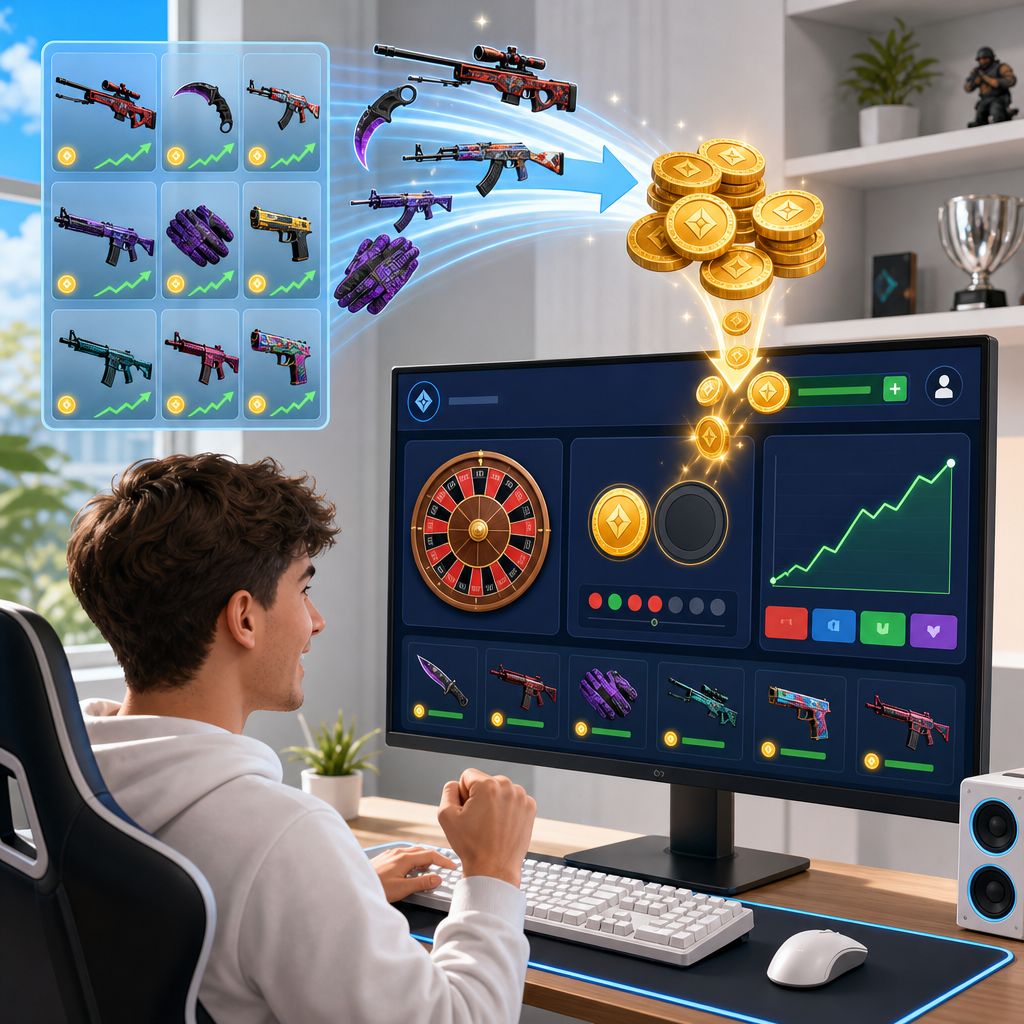
Some platforms, such as CSGO Casino, are widely discussed in gaming circles as examples of how these inventories can be connected to external sites. In broad terms, the process involves linking a game account or item trade, moving selected skins out of the player’s inventory, and converting their market value into a site balance used for various games. The result is a bridge between game cosmetics and an online balance that behaves much like a wallet inside the platform.
How csgo casino skin games function
Once skins are converted into a site balance, players enter a familiar looking environment. Many csgo casino style sites offer games that resemble coin flips, roulettes, crash multipliers, or case openings. Behind each game sits a simple core: the player’s balance is staked, random outcomes are generated, and the balance is updated according to predefined odds and payout tables.
The key technical piece is random number generation. Reputable platforms explain how their results are produced, often through systems that allow players to check that each outcome could not be altered after the fact. Some use hash based methods where seeds are shown before or after a round, so users can verify results with external tools. This is not the same as formal auditing, but it illustrates how the sector has tried to borrow concepts from broader online fintech infrastructure.
Another important point is the way odds and house edges are built into each game type. In a crash style game, for example, a multiplier ticks upward until a sudden stop. The player can cash out at any point before the stop, receiving stake times multiplier, or lose the stake if the stop happens first. The math is tuned so that the average expected return per round is below 100 percent, which is how the game operator earns revenue over large numbers of plays.
Valuation pricing and payment flows
Behind the scenes, skin based platforms rely on pricing feeds from marketplaces and aggregators. When a player deposits a skin, the platform assigns a value based on recent trades, lowest ask prices, or a weighted average. That figure is then translated into the site’s own units, which might be coins, credits, or a cash equivalent. Effective platforms update these values frequently, since popular skins can move in price as game updates change meta preferences or as new cases enter circulation.
On the withdrawal side, players usually convert their in-site units back into skins or, on some platforms, into other forms of value such as gift cards or third party wallet balances. Each step involves spreads, fees, or conversion margins. For example, an operator might credit a deposit slightly below open market price to account for volatility and liquidity, while withdrawals might be filled using inventory purchased at lower levels. This behaviour is similar to how currency exchanges manage their buy and sell quotes.
Payment rails add a further layer. Some csgo casino style operations integrate card payments, mainstream online wallets, or cryptocurrencies, while others focus purely on skins. Whenever more traditional payment methods are involved, the platform has to handle chargebacks, fraud screening, and identity checks. That draws the sector closer to the broader fintech world, where transaction monitoring, know your customer flows, and cross border settlement are standard concerns.
Regulation transparency and regional nuances
The regulatory picture for skin based casino style games varies widely across jurisdictions. Some countries treat any site that lets users wager items with real world value in a similar way to traditional gambling, which can trigger licensing, auditing, and consumer checks. Others have not yet drawn clear lines between entertainment sites, trading hubs, and more casino-like operations.
In the United States, the situation is still evolving, and treatment can differ between states. There has been debate around whether skins count as monetary value and how closely skin wagering resembles more familiar betting products. As regulators and lawmakers gain a better understanding of how CS2 economies function, the framework for these platforms is likely to keep changing.
From a transparency point of view, experienced users often look at factors such as public explanations of game mechanics, access to provably fair or verifiable results, clarity about how skin prices are set, and detail around withdrawal terms. These elements mirror what finance oriented readers would expect from other online platforms handling funds or value, where clear disclosures and understandable mechanics matter more than flashy design.
What CS2 skins teach fintech observers
For fintech professionals, csgo casino style sites are an interesting case study in how virtual items can behave like money. Skins are not issued by a bank, and they sit inside a game ecosystem, yet they trade, appreciate, depreciate, and flow between users in patterns that resemble small scale markets. Liquidity clusters around popular items, price charts can show momentum, and sentiment in player communities often drives quick moves.
The conversion of skins into site balances is also a live example of tokenization concepts. An item with variable open market value is translated into a steady unit inside a closed platform, used for games, then sometimes turned back into items or other assets. Every step relies on pricing oracles, conversion rules, and clear user interfaces that explain what is happening to the player’s value at each point.
Finally, CS2 skin games highlight the importance of user experience in any high frequency transaction environment. Small, repeated wagers share characteristics with microtransactions in mobile games, creator tipping tools, and subscription top ups. Clear balances, instant crediting of deposits, and transparent histories of wins and losses all feed into trust and engagement. For readers who follow the intersection of finance and gaming, the CS2 skin economy offers a detailed, fast moving sandbox where these principles play out in real time.
As the game itself evolves and new items enter circulation, this ecosystem will continue to shift. Understanding how the underlying mechanics work, from pricing to payment flows and regulation, helps players and observers follow the conversation with more clarity and a deeper appreciation for the blend of entertainment and finance at its core.