The claim that a vibe coding game can turn someone into a game creator overnight is not a marketing figure of speech. It is a description of a timeline that is genuinely achievable for anyone who sits down with a clear feeling and the right tools. Creators who have never made a game in their life have gone from first prompt to published, shareable game in a single evening. Not a proof of concept or a demo — a complete, publishable experience with a shareable link.
The evidence is in the communities forming around this way of working. Creators with backgrounds in illustration, music, writing, and design are sharing their first games — made in an evening, often their first creative project in a new medium — and the response from players is treating them as genuine games, not experiments. The overnight timeline is real, and understanding why it is possible changes how you think about what it takes to make a game.
The Old Path to Game Creator (And Why Most People Never Finished It)
The traditional path to game creator was long and attrition-heavy. It ran through tutorials, documentation, engine configurations, and a learning curve that was steep enough to filter out everyone without either strong technical aptitude or unusual persistence. The people who made it through were not necessarily more creative or more motivated than the people who quit — they were better suited to the specific demands of the technical learning process.
The creative vision that led most people to want to make games in the first place was rarely the thing that determined whether they finished. Technical tolerance was. The vibe coding game approach bypasses the entire technical phase and goes directly to the creative one, which means the filter is no longer technical tolerance. It is creative intent and follow-through — which is a much more appropriate filter for a creative medium.
Going From Zero to Published Vibe Game on Combos in One Evening
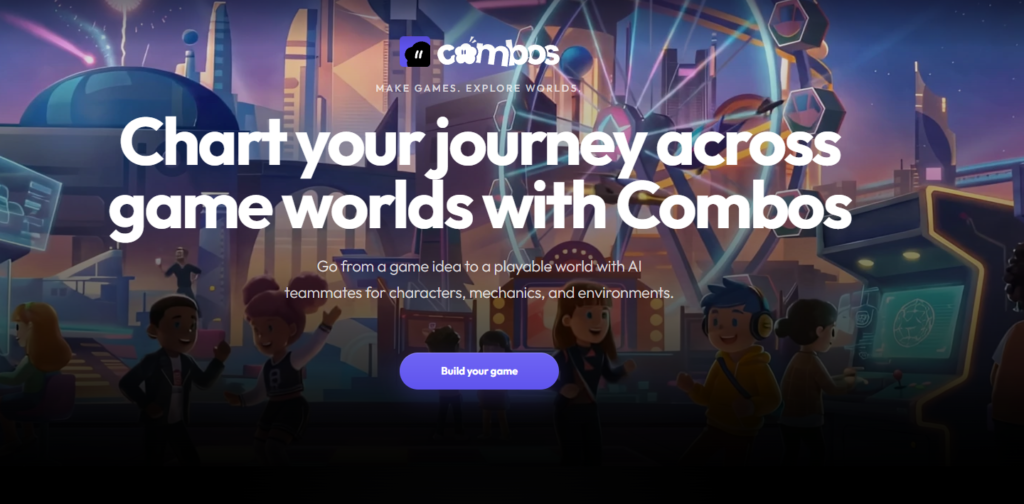
Here is how a complete first-timer can go from zero to published vibe coding game in a single evening on Combos with its AI game agent.
Step 1 — Pick a Mood Right Now: Start at combos.fun after dinner — pick a mood that matches how you are feeling in that moment. The authenticity of a mood you are currently experiencing produces a more coherent game than one you are trying to reconstruct from memory.
Step 2 — One Sentence to Boo: Give Boo a single evocative sentence and let the Game Design Document surprise you. Resist the temptation to read it as a contract to negotiate — read it as an interpretation to react to.
Step 3 — Play Before Changing Anything: Play the first build before changing anything. First impressions, even of your own work, are the most honest. What you feel in the first sixty seconds of playing a game you just described is accurate information about whether the translation worked.
Step 4 — Two Changes Then Publish: Make one or two targeted changes that address the biggest gap between what you played and what you imagined, then publish before you talk yourself into a third pass. The energy of the first evening is worth more than another hour of refinement.
The Psychological Shift When You Hold Something You Made
There is a specific and well-documented shift that happens to creators the first time they hold something they made — something real that exists and can be shared. It is a shift in self-perception: from someone who wants to make things to someone who makes things. That shift is not trivial. It changes the relationship to creative risk, to imperfection, and to the prospect of making the next thing.
For game creators specifically, this shift is particularly significant because the medium has historically been so difficult to enter that many people lived for years in the first category — wanting to make games — without ever crossing into the second. The vibe coding game approach makes the crossing happen fast enough that it does not require unusual persistence or technical talent. It requires only a creative instinct and an evening.
What Most Overnight Creators Do Next
What happens after the first game is published is instructive. Most overnight creators do not stop. The act of publishing a first game — holding the shareable link, watching someone else play it — creates a motivation that sustains the next project and the one after that. The second game is usually more ambitious than the first, not because the creator’s skills have dramatically increased overnight, but because the first game resolved the question of whether they could make something at all.
Some overnight creators stay within the vibe coding game approach indefinitely, developing a distinctive aesthetic voice across a series of short, atmospheric experiences. Others use the first game as a bridge toward more mechanically complex projects. Both paths start in the same place: a single evening, a single feeling, and a shareable link that exists by morning.
Conclusion
The vibe coding game has changed what it means to become a game creator. The timeline is overnight. The prerequisites are a feeling and a browser. Combos provides the rest — the AI interpretation, the asset generation, the playable prototype, the shareable link. What you bring is the creative intent that makes the result worth playing. If you have a feeling you have been carrying around, tonight is a reasonable time to turn it into a game.
READ ALSO: How to Make a Demo Version of Your AI Game