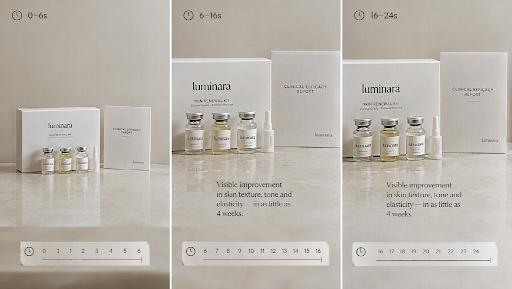
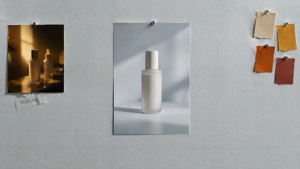
The hard part was never the idea. I can see the scene. Warm light, a slow push, a line that sounds like it belongs on a billboard. The hard part is that the finished clip often looks like a mood board that forgot the SKU. Hours of planning used to hide that. Faster generation made it obvious.
I did not need another essay about “bringing ideas to life.” I needed a place where the market evidence survived into the file, and a model that could hold the object for twenty seconds without inventing a second bottle. That is a different sentence from “AI video for storytellers.” One is a workspace. One is a generate. I stopped ranking them as two muses.
The story used to start in my head. That was the leak.
A concept is cheap. Atmosphere is cheap. What used to cost money was the crew. What costs money now is a week of generates that never meet the listing. I would write a scene, get a pretty take, and only then look at the Amazon title. The search terms were already the story. I had been writing fan fiction about my own product.
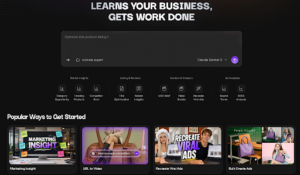
An AI Marketer is the desk I use before anyone talks about cinema. It researches connected TikTok Shop, Amazon, and Shopee signals — category, competitors, listings, comments — and turns that into a plan I can actually read: positioning, audience, hooks, next actions. Then it stays in the same project for campaign-ready images, video, audio, URL-to-video, a controlled remake of a pattern that already works, variations I can compare. I describe the goal: product, URL, audience, the assets on disk. I review. It does not publish the campaign for me.
General chat is useful for a paragraph of advice. It is weak when the next file has to remember last week’s report. This workspace keeps the brief, the stills, and the decisions attached. That is the “complete environment” I actually needed — not five disconnected generator tabs.
A typical Monday: paste the product URL, ask for three evidence-backed angles, kill the one I cannot stand behind, keep the packshot in the project. Tuesday is production from that angle, not a new mood.
When the story is already a shot list, I stop prompting “cinematic”
Once the angle is approved, I still need a take that does not drift. Stitching five eight-second orphans is how the cap changes colour. I write seconds. I attach the stills I already paid for.
Seedance 2.5 is the model for that beat: about four to thirty seconds from text plus image, video, and audio references, with timing and storyboard-friendly control. On a hosted generator the export I see is typically 1080p-class, not a 4K poster. If second eighteen grows a necklace, the folder is wrong. I do not prompt “more story.” I fix the kit.
A brief that behaves: “0–6s the same packshot; 6–16s a slow push on the claim from the report; 16–24s hold for a caption I will type — no extra hands, no new room.” Dialogue and on-screen text can run in more than one language. I still spell the brand the way the listing spells it.
I keep my taste. I pick the message and the audience. The model explores the motion. I throw away the take that looks expensive and lies. That is the only “personal style” that matters in a shop: the object is still the object.
What I will not outsource
I will not treat a generated face as a customer. I will not skip rights on a still. I will not announce a conversion miracle I did not measure. Credits are studio time. Marketplace data is a snapshot. If the founder has to say the line, I record the founder.
Imagination is not the scarce resource. Continuity is. Start with the AI Marketer when the story has to meet a live market. Reach for Seedance 2.5 when the scene has to last half a minute without growing a second product. Post the file I watched — the one that still looks like the thing I sell.