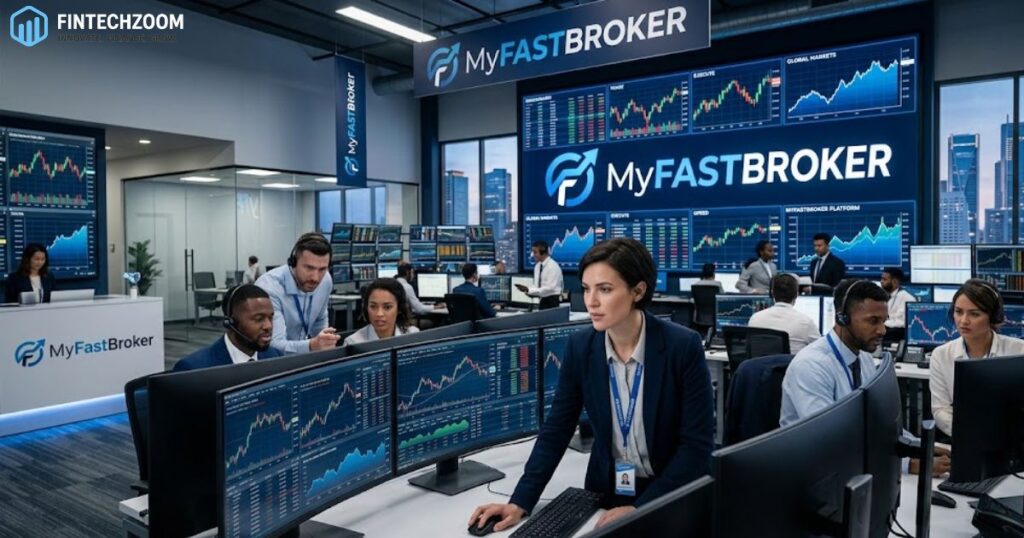
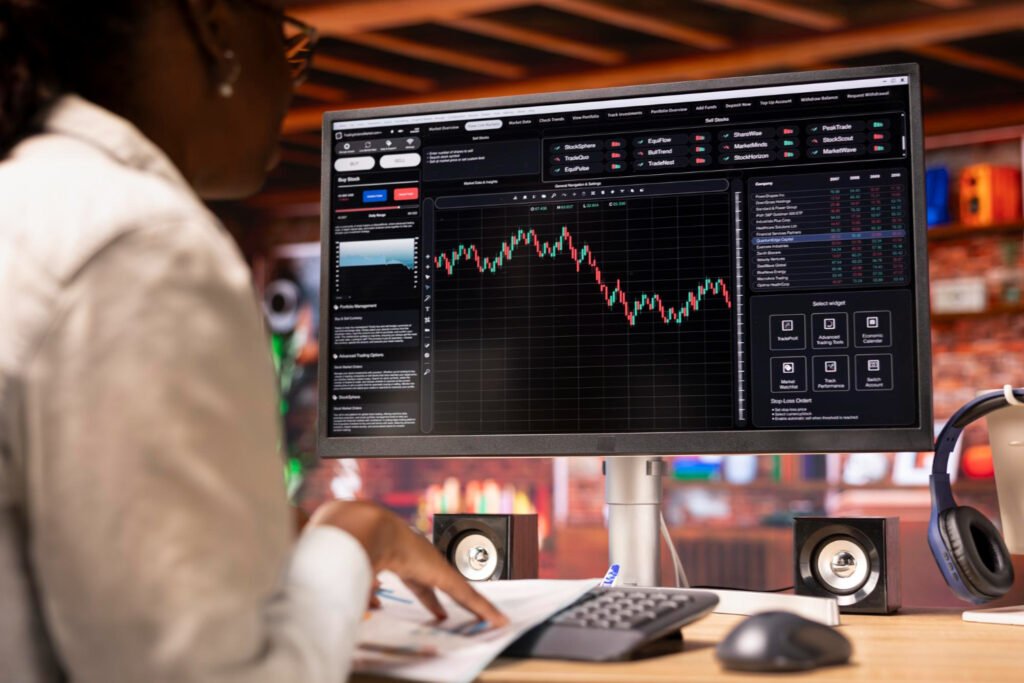
Retail traders benefit from advanced trading terminals like MetaTrader 5 (MT5) to deploy a wide range of strategies and customize their experience through Expert Advisors (EAs) and custom-built technical indicators. Still, a professional trading platform can offer much more than that, catering to institutional investors and businesses managing large trading volumes and complex exposures.
Some examples of such platforms in the Forex market include 360T, owned by Deutsche Börse Group, Bloomberg FXGO, a multi-bank Forex platform offered by Bloomberg, and LSEG FXall, an end-to-end electronic trading platform from the London Stock Exchange Group. Besides these multi-dealer Forex venues, there are institutional Forex liquidity and execution solutions like StoneX Pro and FXSpotStream.
These venues and services support advanced Forex capabilities that you won’t typically find on a retail-oriented terminal. Here are the main workflows addressed by institutional Forex services.
Access to Deep and Diverse Liquidity
One of the main functions of professional trading platforms is to provide access to deep Forex liquidity. These platforms connect institutional traders to multiple banks and market makers worldwide, helping them diversify their liquidity sources.
They can also operate as liquidity aggregation systems, displaying order books that bundle quotes and available sizes from multiple liquidity providers. For institutions, this is important, as they can see where specifically liquidity is available at different price levels. Having this valuable resource is especially relevant for large orders.
Forex is the world’s largest and most liquid financial market, and professional trading platforms play a key role in the infrastructure behind it.
The Bank for International Settlements (BIS) found that the average daily turnover reached $9.6 trillion in April 2025. It estimated that 59% of Forex trading was executed electronically. This includes a mix of direct dealer connections and electronic venues that connect traders with multiple liquidity providers.
Management of Multiple and Complex Orders
Institutional Forex traders can handle multiple advanced orders simultaneously. While retail traders also have access to different order types, professional platforms are in a different league, focusing on scale and complexity.
For example, instead of executing 100 individual Forex orders, platforms like Bloomberg FXGO can group and net offsetting orders before executing only the remaining exposure.
Also, a large order can be split into multiple smaller pieces and executed through different methods or liquidity providers. For example, one portion can be executed via an RFQ (Request for Quote) and another through bank algorithms.
An asset manager or hedge fund can easily import an entire portfolio comprising multiple currencies, allocations, and orders and execute them as a multi-bank batch.
Automating and Optimizing Trade Execution
One of the major benefits of professional trading platforms is automation, and these systems are capable of handling key workflows on their own. Most of the order tasks described earlier can be managed without ongoing human intervention.
Automation is used in many different ways by these institutional trading platforms. Euromoney points to two examples from 360T. One is split risk, which competes forward points automatically before routing fixing orders to the winning market maker. The other is mixed-givens, which nets currency pairs with differing notionals and trades the leftover value competitively. Through a partnership, the platform also offers integrated analytics and cost analysis, and these represent another major function of professional trading platforms.
Advanced Analytics to Improve Execution
Besides execution, analytics plays a critical role in the trading process, and professional trading platforms deliver research and transaction monitoring.
Some platforms integrate research and market intelligence, including scheduled economic events and other fundamental data, as well as scanners, technical analysis, and screening tools.
At the same time, they can offer analytics across the entire trading lifecycle. For example, before execution, they can help traders evaluate liquidity and trading costs. Eventually, during the trading process, traders can monitor how orders are being executed and verify execution quality against a wide range of benchmarks.
Analytics can also support compliance workflows, with platforms like LSEG FXall helping traders monitor trading activity and meet reporting requirements.
Connecting the Entire Trade Lifecycle
Last but not least, professional trading platforms can connect the different stages of a trade that we discussed earlier. This helps institutional traders reduce manual processes and eliminate the need to move data between systems manually.
For example, with straight-through processing (STP), a trade is managed automatically beyond just order execution. The system confirms, settles, records, and sometimes reports the trade to regulators.
Platforms can communicate with order management systems (OMS) and treasury management systems (TMS) to automatically move order and trade details between different segments. After execution, transactions can also be sent directly to clearing and settlement infrastructure or regulatory reporting systems.
Thanks to this connectivity and communication across multiple stages, professional trading platforms can handle hundreds or thousands of transactions without friction. Without this automation, manual processing would require significant time or large teams to handle all the tasks, leaving more room for errors. Thanks to APIs and FIX connectivity, Forex trading platforms can also integrate with an institution’s existing technology and internal workflows.