
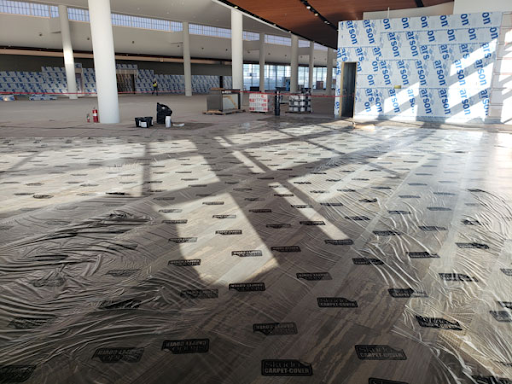
Anyone who has managed a renovation knows the budget rarely breaks in one dramatic moment. It slips through dozens of small surprises: a delayed delivery, an extra trip from a subcontractor, a repair nobody planned for. One of the most avoidable of these surprises sits right under everyone’s feet.
Carpet is often installed or left in place while other trades are still working. Painters, electricians, drywall crews and cleaners all cross it repeatedly, carrying tools, pushing equipment and tracking in dust. By the end of the job, carpet that was new a few weeks earlier can look worn, stained or damaged. For property owners, investors and contractors, that damage turns into cleaning bills, repairs or full replacement, and those costs come straight out of the project’s return.
Where The Hidden Costs Come From
Carpet damage on a job site usually builds slowly. Common sources include:
Foot traffic, which grinds dirt and grit into the fibers.
Ladders and tools, which can snag, crush or tear the surface.
Paint spills and overspray, which can leave permanent stains.
Construction debris, including dust, drywall particles and small fragments.
Equipment, from carts to scaffolding, that leaves marks and indentations.
None of these feel serious on their own. A drip of paint here, a muddy path there. But across a large office floor, a school, an auditorium or a set of rental units, small marks add up. Professional deep cleaning may fix some of it. Stains and tears often cannot be fixed, and replacing carpet means paying for material, labor, disposal and possibly another delay before the space can open.
Why It Matters To The Bottom Line
For investors and property owners, renovation budgets connect directly to returns. A commercial space that opens late collects rent late. A rental unit that needs new carpet before move-in sits empty longer. A hotel or event venue that has to redo flooring loses bookings. Each delay affects cash flow, and cash flow is what keeps a property performing.
Contractors face a different version of the same problem. When finished carpet is damaged, someone has to pay. Disputes over which trade caused the damage can drag on, eat into margins and strain relationships with clients and subcontractors. A reputation for handing over damaged spaces can also cost future work.
Spending a small amount up front on temporary protection is usually far cheaper than paying for repairs later. It works much like insurance: a modest, predictable cost that guards against a larger, unpredictable one.
Building Protection Into The Budget
The most effective approach is to plan for floor protection from the start rather than adding it once damage appears. A few steps help:
Identify every carpeted area that will see trade traffic.
Note which areas will carry the heaviest loads or equipment.
Estimate how long each area needs protection.
Assign responsibility for installing, checking and removing it.
Include protection in the project estimate as a line item.
Treating protection as a budgeted item, instead of an optional extra, makes it far more likely to be done properly. It also gives project managers a clear way to compare the cost of prevention against the potential cost of replacement.
Matching Protection To Traffic Levels
Not every carpeted area faces the same risk, so the type of protection should match the conditions. For most rooms with regular foot traffic and light work, purpose-made temporary films offer a practical solution. These are typically clear, self-adhesive plastic coverings designed to protect against dirt, stains, small spills and everyday wear while leaving no residue behind when removed.
Good carpet protection during construction depends on choosing products made for the specific surface. Many protective films are designed for synthetic carpet only and should not be used on wool carpet or on hard floors such as hardwood, tile, stone, laminate or vinyl plank. Using the wrong product on the wrong surface can create the very damage you are trying to prevent. Duration matters as well. Temporary films are usually rated for a limited period, often measured in weeks or a few months, so long projects may need a plan for replacing or upgrading protection partway through.
For areas with heavy activity, such as main corridors, equipment routes or spaces where materials are stored, rigid protective boards can add a stronger layer. These boards resist impact and moisture and help prevent damage from rolling loads and dropped tools.
Because jobsite conditions vary, it is worth checking with a product supplier or representative before making a final choice. Temperature, project length, traffic levels and the type of carpet can all influence which option works best.
Keeping Protection Effective
Installing protection is only the first step. To get full value from the investment, it needs to stay in good condition throughout the project. Regular walk-throughs can spot torn sections, lifted edges or areas where coverings have been removed. Fixing these quickly keeps small gaps from becoming expensive problems.
Timing the removal matters too. Taking protection off before the final trades and cleaning crews finish leaves carpet exposed at the busiest stage of the project. Keeping it in place until the last work is done, then inspecting the carpet as coverings come off, gives a clear picture of the condition being handed over.
Applying The Same Thinking Elsewhere
The logic behind carpet protection applies across a renovation. Doors, glass, stairs, tubs and finished walls all face similar risks from construction traffic. Projects that plan protection for every vulnerable surface usually see fewer punch-list items, fewer disputes and smoother handovers. For property owners, that means spaces reach tenants or guests sooner. For contractors, it means fewer callbacks and stronger margins.
Small Spend, Strong Return
Renovation budgets are often tight, and every line item gets scrutinized. Temporary floor protection can look like an easy cut. In practice, it is one of the most reliable ways to avoid costs that are much larger and much harder to predict. Planning for it early, choosing the right product for each surface and keeping it in place until the job is done helps protect not only the carpet but the financial return the whole project depends on.