
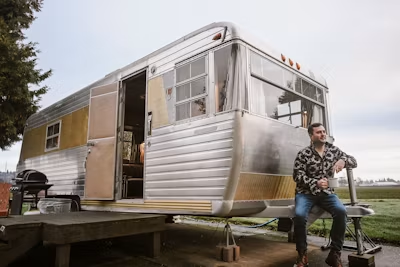
Moving a manufactured home is not the same as hiring a standard moving company to transport furniture, boxes, or equipment. It requires specialized licensing, heavy-duty equipment, route planning, permits, setup knowledge, and experience with manufactured housing requirements. That is why homeowners should look for professional mobile home movers in Idaho who understand both the transportation process and the local rules that apply. Whether you are moving a single-wide, double-wide, or modular-style manufactured home, the right mover can help protect the structure and reduce costly delays. Before you choose a company, it is important to know who typically offers this service, what the process includes, and which questions to ask before signing a contract.
What Do Mobile Home Movers Do?
Mobile home movers prepare, transport, and help reset manufactured homes from one location to another. Their work often begins with an inspection to determine whether the home can be moved safely. They may check the frame, axles, wheels, hitch, skirting, exterior attachments, and overall condition of the structure. If the home is move-ready, the company will coordinate permits, plan the route, disconnect certain exterior elements, and arrange the proper towing equipment. Depending on the service package, some movers may also help with blocking, leveling, anchoring, utility coordination, and setup at the destination.
Because manufactured homes are large and heavy, the process requires careful planning. Movers must consider road width, bridges, grades, turns, traffic, weather, and local transportation restrictions. A home that has been in place for many years may also need repairs before it can be moved. Older homes may have weakened frames, damaged siding, or missing transport components that need attention. A professional mover should explain these concerns clearly before the move begins.
Who Offers Mobile Home Movers in Idaho?
Mobile home moving services are usually offered by specialized manufactured home transport companies rather than general household movers. These companies often serve specific regions of Idaho, such as the Treasure Valley, Magic Valley, eastern Idaho, northern Idaho, or rural communities where manufactured homes are common. Some companies focus only on transport, while others offer full-service relocation that includes teardown, hauling, setup, leveling, and anchoring. In some cases, manufactured home dealers, mobile home parks, contractors, or property managers may also recommend movers they regularly work with. The best provider will depend on your location, the size of your home, the distance of the move, and the amount of setup work required.
When comparing mobile home movers in Idaho, look for companies with direct manufactured home experience. A provider should be familiar with Idaho permitting, road requirements, escort needs, and local setup expectations. It is also helpful to choose a mover who has experience with your specific type of home. A single-wide move may be simpler, while a double-wide move usually involves separating sections, transporting each section, and reconnecting them at the new site. Ask whether the mover has handled similar homes, similar routes, and similar destination conditions.
When Might You Need a Mobile Home Mover?
Homeowners need mobile home movers for many different reasons. Some people buy a used manufactured home and need it transported to private land. Others move from one mobile home park to another because of rent changes, ownership changes, or personal needs. A move may also be necessary when land is sold, inherited, developed, or cleared for another use. In rural areas, homeowners may relocate a manufactured home to stay closer to family, work, schools, or agricultural property. Whatever the reason, the move should be planned early because permits, site preparation, and scheduling can take time.
Common reasons to hire mobile home movers include:
- Moving a purchased manufactured home to a new property
- Relocating from one mobile home park to another
- Moving a home off land that has been sold
- Placing a home on family-owned property
- Repositioning a home on the same parcel
- Transporting a single-wide or double-wide to a rural site
- Moving a home before redevelopment or construction begins
What Should You Ask Before Hiring a Mover?
The most important question is whether the mover is properly licensed, insured, and experienced with manufactured homes. Ask for proof of insurance and make sure the policy covers the type of move you need. You should also ask whether the company handles permits or expects you to obtain them yourself. Permitting can be one of the most confusing parts of the process, so it helps to work with a mover who understands the requirements. A reputable company should be willing to explain what is included, what costs extra, and what responsibilities remain with the homeowner.
You should also ask about the full scope of work. Some companies only move the home from point A to point B, while others provide teardown and setup services. If you need skirting removed, decks detached, utilities disconnected, tie-downs released, or blocking installed, confirm whether those services are included. Ask whether the quote includes escort vehicles, route surveys, tires, axles, hitches, permits, and destination setup. A low estimate may not be a good deal if it leaves out essential services.
What Affects the Cost of Moving a Mobile Home?
The cost of moving a mobile home depends on several major factors. Size is one of the biggest considerations because double-wide homes require more labor and equipment than single-wide homes. Distance also matters, but short moves can still be expensive if the route is difficult or the home needs significant preparation. The age and condition of the home can also affect pricing, especially if repairs are needed before it can be transported. Site conditions at both the pickup and destination locations may increase the amount of labor required.
Key cost factors include:
- Home size and weight
- Single-wide or double-wide configuration
- Distance of the move
- Route difficulty and escort requirements
- Permit costs
- Tire, axle, and hitch condition
- Teardown and setup needs
- Foundation, blocking, and leveling work
- Utility disconnection and reconnection
- Accessibility at both properties
A clear written estimate is essential before the move begins. The estimate should list the services included and identify costs that may change. For example, unexpected frame repairs, route changes, weather delays, or site access problems may increase the final price. Ask whether the quote is fixed, estimated, or subject to change based on inspection results. This helps prevent surprises and gives you a better way to compare companies.
How Should You Prepare for a Mobile Home Move?
Preparation starts with confirming that the home can legally and physically be moved. Some older manufactured homes may not meet current standards or may have damage that makes transportation risky. You should also confirm that the destination property allows manufactured homes and is ready for placement. This may involve zoning approval, park approval, permits, foundation preparation, driveway access, and utility planning. The mover can help identify issues, but the homeowner is often responsible for making sure the destination site is approved and ready.
Before moving day, remove personal belongings and secure anything that could shift during transport. Detached structures such as porches, decks, stairs, awnings, sheds, and skirting may need to be removed. Utilities must be disconnected safely by qualified professionals. The route should be confirmed, and the destination should be accessible for large transport equipment. Good preparation can reduce delays, prevent damage, and make the move smoother from start to finish.
FAQ About Mobile Home Movers in Idaho
Do mobile home movers in Idaho handle permits?
Many do, but not all. Always ask whether permit handling is included in the quote or billed separately.
Can any mobile home be moved?
No. The home must be structurally sound enough for transport and may need required wheels, axles, and hitch components.
How long does a mobile home move take?
The physical transport may take a day, but planning, permits, teardown, site preparation, and setup can take much longer.
Do I need to remove decks and skirting before the move?
Usually, yes. Some movers offer this service, while others require you to hire a contractor or handle it separately.
Can a double-wide mobile home be moved?
Yes. Double-wide homes are usually separated into sections, moved separately, and rejoined at the new site.
Will movers reconnect utilities?
Some may coordinate utility work, but licensed electricians, plumbers, or HVAC professionals are often required for reconnection.
Should I get more than one estimate?
Yes. Comparing multiple quotes helps you understand pricing, services, and potential extra charges.
Choosing the Right Mobile Home Mover in Idaho
Choosing the right mover starts with asking detailed questions and getting everything in writing. Look for a company that has experience with manufactured homes, understands Idaho routes and permits, and clearly explains the entire process. Avoid choosing based only on the lowest price, especially if the quote does not include teardown, setup, permits, escorts, or site-related work. A reliable mover should inspect the home, review the route, explain risks, and provide a written scope of service. The more specific the agreement is, the easier it will be to avoid confusion.
Mobile home relocation is a major project, but the right team can make it manageable. Professional mobile home movers in Idaho can help protect your home, coordinate important details, and move the structure safely to its new location. Before hiring anyone, ask about licensing, insurance, permits, setup, route planning, and possible extra costs. Make sure you understand what is included and what you must handle on your own. With careful planning and the right mover, you can complete the relocation with greater confidence and fewer surprises.