Providing convenient food service has become increasingly difficult for organizations operating beyond traditional business hours. Hospitals never close, factories often run multiple shifts, and transportation hubs continue serving passengers throughout the day and night. Even office buildings and university campuses are extending operating hours to support changing work and study patterns.
While demand for ready-to-eat meals continues to grow, staffing a cafeteria around the clock is rarely a practical solution. Rising labor costs, limited kitchen space, and changing consumer expectations are encouraging businesses to explore new approaches.
One solution receiving growing attention is the Hot Food Vending Machine—an unattended system that combines Refrigerated Storage, automated heating, and digital management to provide fresh meals whenever customers need them.
The Shift Toward Self-Service Food Operations
Automated Meal Service has already transformed industries such as banking, retail, and transportation. Food service is following the same path.
Instead of relying entirely on staffed kitchens, organizations are introducing automated equipment that extends meal availability without significantly increasing operating costs.
Unlike traditional vending machines that mainly sell snacks and beverages, modern Hot Food Vending Machines are designed for prepared meals. Meals are stored under refrigeration and heated automatically after payment, allowing customers to receive freshly heated food within minutes.
For businesses, this creates an opportunity to provide reliable meal service even when restaurants or cafeterias are closed.
Why Traditional Food Service Is Becoming More Challenging
Many commercial facilities face similar operational problems.
Keeping a cafeteria open for only a small number of customers during late-night hours is often difficult to justify financially. Recruiting staff for overnight or weekend shifts has also become more expensive in many markets.
Space presents another challenge. Installing a full commercial kitchen requires considerable investment, while maintenance and daily operations continue to generate long-term costs.
Automated Meal Service addresses many of these issues by reducing labor requirements while making better use of available floor space.
Technology Is Driving Better Customer Experiences
Today’s Hot Food Vending Machines offer far more than automated meal dispensing.
Modern commercial systems typically combine Refrigerated Storage, intelligent microwave heating, multiple payment options, and Cloud-Based Management into one integrated platform.
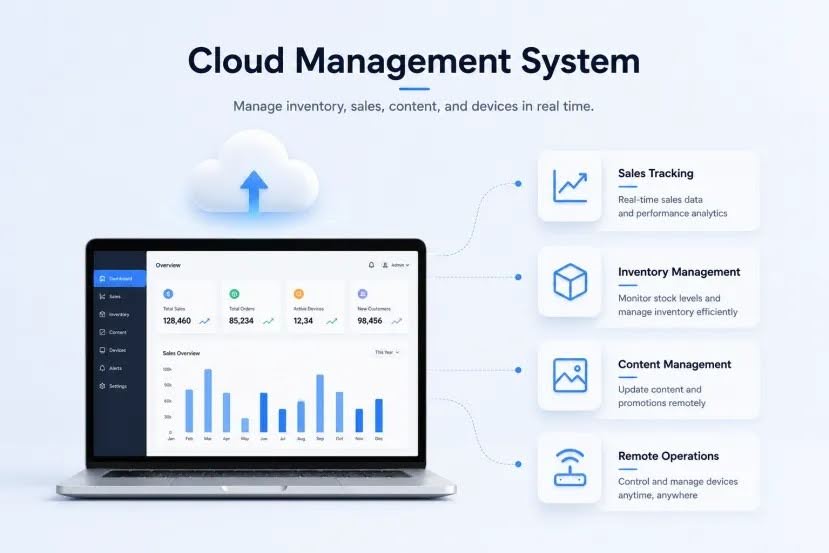
Operators can remotely monitor inventory, review sales performance, receive low-stock alerts, and check equipment status through centralized software. Remote Monitoring improves operational visibility while reducing unnecessary site visits.
For customers, digital payment methods such as QR codes, contactless cards, Apple Pay, and Google Pay create a faster and more convenient purchasing experience through Cashless Payment.
Industries Seeing the Greatest Benefits
Although almost any public location can benefit from automated food service, several industries are adopting the technology more quickly than others.
Hospitals use Hot Food Vending Machines to provide meals for medical staff, patients, and visitors throughout the day and night.
Factories install them near production areas to support employees working rotating shifts without interrupting operations.
Universities place them in student centers, dormitories, and libraries where meal demand often continues after campus dining facilities close.
Transportation hubs—including airports, railway stations, and bus terminals—also benefit because travelers frequently require convenient meal options regardless of the time of day.
Looking Beyond the Equipment
Businesses evaluating automated meal solutions should focus on more than hardware specifications.
Food storage performance, heating consistency, Cloud-Based Management, payment flexibility, maintenance efficiency, and after-sales support all contribute to long-term operating success.
The supplier’s experience is equally important. A manufacturer with strong engineering capabilities, commercial project experience, and OEM & ODM capabilities can provide valuable support throughout installation, operation, and future expansion.
For organizations planning multiple deployments, choosing a scalable solution is often more important than selecting the lowest initial purchase price.
The Future of Commercial Meal Service
Automation will continue changing how businesses provide food services.
As digital payment becomes more common and remote management technologies continue to improve, 24/7 Meal Service is expected to become part of everyday operations across healthcare, education, manufacturing, transportation, and commercial real estate.
Rather than replacing restaurants, Hot Food Vending Machines complement existing food service by filling the gap when traditional dining options are unavailable. This creates greater convenience for customers while improving Operational Efficiency for operators.
Final Thoughts
Hot Food Vending Machines have evolved from simple vending equipment into intelligent Commercial Food Service solutions. By combining Refrigerated Storage, automated heating, Cloud-Based Management, and flexible payment technologies, they help organizations deliver convenient meal services with fewer operational constraints.
Companies such as ZHILAI are developing commercial hot food vending solutions designed for hospitals, factories, campuses, offices, and transportation hubs. The ZHILAI Hot Food Vending Machine combines refrigerated storage, intelligent microwave heating, remote management, multiple payment options, and OEM & ODM customization to support businesses looking to expand 24/7 Meal Service while maintaining high Operational Efficiency.
If your organization is exploring automated meal solutions, learning about different deployment models and available technologies is an excellent place to start. Understanding how modern Hot Food Vending Machines operate will help you make a more informed investment decision as unattended food service continues to evolve.
READ ALSO: Recycling Baler Machines vs. Compactors: What’s Best for You?