Security Is No Longer Just About Watching
Security technology used to feel mostly reactive. A camera recorded what happened. A lock slowed someone down. A guard checked an area after a concern was reported. Those tools still matter, but modern security has moved far beyond simply watching and waiting. The real advantage now comes from using technology to notice patterns, send alerts, control access, and support faster decisions before a small issue turns into a serious problem.
That shift matters at home as much as it does in business. People who explore residential security systems are often looking for more than an alarm. They want awareness, convenience, speed, and peace of mind. The same mindset applies to organizations, property managers, schools, warehouses, offices, and public spaces. Security technology is most useful when it helps people act earlier and smarter.
Technology Helps You See What People Miss
Even the most attentive person cannot watch every doorway, camera, parking area, hallway, and access point at once. Human attention has limits. People get tired, distracted, overwhelmed, or pulled into other tasks. Security technology helps fill those gaps.
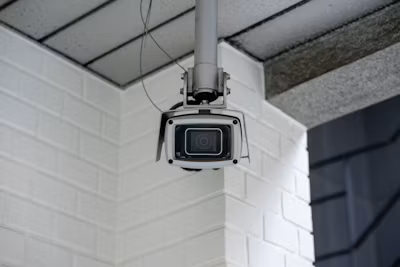
AI powered surveillance, motion detection, cloud based access control, automated alerts, and connected sensors can give teams a clearer picture of what is happening in real time. Instead of relying only on someone to notice a problem after the fact, technology can flag unusual activity as it happens.
This does not mean machines replace people. It means people get better information. A security team can focus on judgment, response, and decision making instead of spending all day scanning screens or walking the same route without context.
Real Time Awareness Changes the Response
Speed matters during a security event. Whether the issue is a break in, unauthorized access, a safety concern, or suspicious activity, the first few minutes can shape the outcome. Technology gives people a chance to respond sooner.
For example, a cloud based access system can show who entered a building and when. Smart cameras can help verify whether an alert is a real concern. Automated notifications can reach the right people quickly. Remote monitoring can help teams understand what is happening before someone arrives on site.
The Cybersecurity and Infrastructure Security Agency’s physical security resources emphasize the importance of planning, assessment, and protective measures for facilities. Modern security technology supports that kind of approach by making prevention and response more organized.
Access Control Is About More Than Locked Doors
A traditional key can be lost, copied, or forgotten. Once it is out of someone’s hands, it can be difficult to control. Cloud based access control gives organizations more flexibility. Access can be added, removed, scheduled, tracked, and adjusted without changing every lock.
This is especially useful for businesses with changing staff, vendors, visitors, contractors, or multiple locations. Instead of wondering who has a key, managers can see permissions clearly and update them as needed.
Access control also supports accountability. If something happens, records can help show who entered certain areas at specific times. That can reduce confusion, support investigations, and help organizations improve policies.
Automation Lowers Operational Strain
Security work can be expensive when every task depends on manual effort. Regular patrols, physical checks, badge reviews, incident reporting, and monitoring can take a lot of time. Technology can reduce that burden by automating repetitive tasks.
Automated systems can send alerts, create logs, detect movement, identify access attempts, and organize data. This helps teams spend less time on routine checks and more time on meaningful action.
Lowering manual strain does not only reduce costs. It can also reduce errors. When people are asked to do the same repetitive task for hours, mistakes are more likely. Automation helps keep watch consistently, even during slow periods, overnight hours, or busy shifts.
Security Data Can Improve Daily Operations
One overlooked benefit of security technology is that it can reveal how spaces are actually used. Access records, camera analytics, and sensor activity may show traffic patterns, busy entry times, unused areas, delivery trends, or repeated bottlenecks.
That information can help leaders make better decisions. Maybe a building needs different staffing at certain hours. Maybe deliveries should use another entrance. Maybe a lobby layout creates confusion. Maybe certain doors are being used in ways the organization did not expect.
Security data should be handled responsibly, with privacy and clear policies in mind. The Federal Trade Commission’s business guidance on privacy and security is a useful reminder that organizations must protect information and use it carefully. When handled properly, security technology can support both protection and better operations.
Liability Can Be Reduced Through Better Records
When something goes wrong, uncertainty can create additional problems. Who was present? Was a door secured? Was there an alert? Did someone respond? Were procedures followed?
Modern security systems can provide records that help answer those questions. Video footage, access logs, alert histories, and response records can support clearer reporting. This can be valuable for insurance claims, internal reviews, legal concerns, and safety planning.
Good records do not prevent every problem, but they can reduce confusion after an event. They also help organizations learn from incidents instead of guessing.
The Best Technology Fits the Real Risk
Not every property needs the same tools. A small office, large warehouse, apartment building, retail store, and single family home all have different risks. The smartest security plan begins with the question, “What are we trying to protect, and what could realistically go wrong?”
From there, technology can be chosen with purpose. Cameras may be useful in one area. Access control may matter most in another. Automated detection may be critical after hours. Remote alerts may be essential for people who travel or manage multiple locations.
Using security technology to your advantage does not mean buying every new device. It means choosing systems that solve real problems.
People Still Need to Know What to Do
Technology is powerful, but it works best when people understand it. Employees, family members, managers, or residents need clear instructions. They should know how to use the system, what alerts mean, who to contact, and what actions to take in an emergency.
A tool that no one understands can become another source of stress. A tool that is easy to use becomes part of a safer routine.
Training, testing, and regular reviews are important. Security needs change over time. A system that worked well last year may need updates as people, buildings, schedules, or risks change.
Security Becomes an Advantage When It Supports Confidence
The biggest benefit of modern security technology is not only stronger protection. It is confidence. People can focus better when they know there are systems helping watch, alert, record, and respond. Organizations can operate more smoothly when they are not relying only on memory, guesswork, or delayed reactions.
Security technology helps reduce manual effort, improve response times, lower liability, and create better visibility. It turns protection into something active instead of passive.
Used well, it does more than guard a space. It helps people make better decisions, respond faster, and feel more prepared every day.