Introduction
Bitcoin mining hosting has grown into a serious infrastructure sector across the United States. More miners, both individual operators and institutional players, are moving away from self-managed setups and into professionally run data centers built specifically for ASIC hardware.
Three states have become particularly relevant in this space: Nebraska, Kansas, and New York. Each offers a different combination of power costs, energy sourcing, and operational conditions that attract different types of mining operators.
This article covers how bitcoin mining hosting works, what makes these three states worth paying attention to, and what anyone evaluating hosting options should understand before making a decision.
What Is Bitcoin Mining Hosting?
Simple version: you own the miners, someone else runs them.
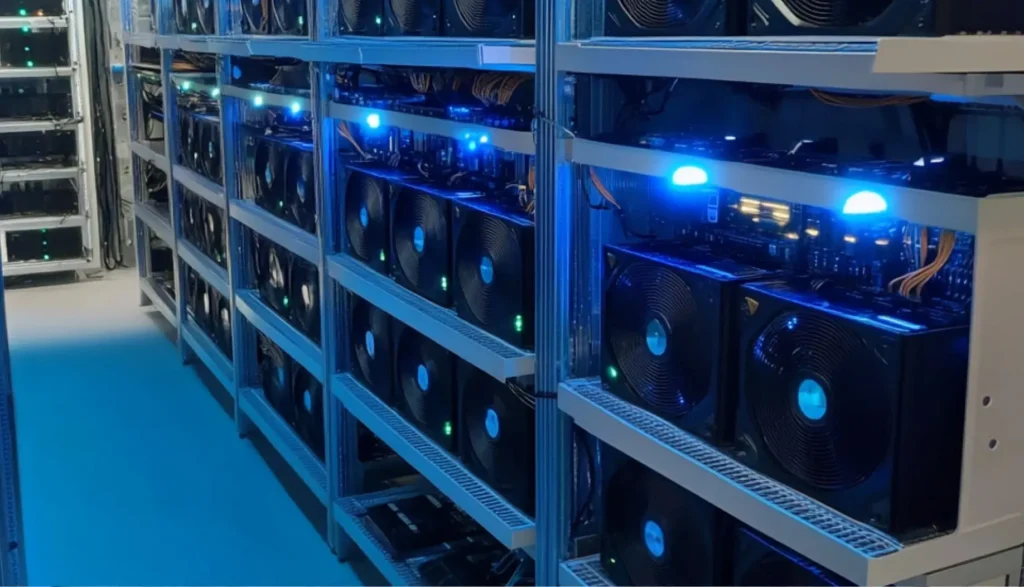
You ship ASIC hardware to a data center built for this kind of load. They handle power, cooling, security, and the internet. Bitcoin goes to your wallet. You pay for electricity, sometimes with a management fee on top.
That’s the whole arrangement. It exists for pragmatic reasons. Mining equipment is hot, noisy, and power-hungry. Without significant electrical modifications, the majority of commercial buildings cannot sustain them. Professional facilities are designed around exactly these demands from day one.
ValueHash runs ASIC hosting across Nebraska, Kansas, and New York, keeping electricity costs low and uptime consistent.
Why did the US Took On So Much Mining Infrastructure?
Electricity Pricing in the Midwest
Parts of the American Midwest regularly generate more electricity than local demand absorbs. That imbalance pushes industrial rates down. For mining operations where power is the biggest operating cost by a wide margin, that pricing difference directly affects whether a facility is viable at all.
A Legal Environment That Doesn’t Shift Overnight
Not perfect, but structured. Operators are able to make long-term plans, construct costly infrastructure, and secure lengthy leases. In places where mining’s legal position is subject to change with every government, that type of stability is more difficult to come by.
Strong Logistics Networks
Shipping heavy ASIC hardware. Sourcing spare parts. Scaling a facility from 50 machines to 500. All of this is genuinely easier inside a developed industrial ecosystem than in emerging regions where supply chains are thinner.
Nebraska: Reliable and Uncomplicated
Nebraska’s electricity system is publicly owned across the board. No investor-owned utilities. That structure has historically produced more stable and predictable industrial pricing, which matters when you’re locking in a multi-year hosting contract.
The state is also largely rural. Land is available, facility costs are modest, and there’s no meaningful community opposition to industrial operations.
It’s not flashy. But mining infrastructure doesn’t need to be flashy. It needs to be consistent.
ValueHash operates hosting facilities in Nebraska for miners looking for a cost-efficient, low-friction base.
Kansas: Renewable Energy at Meaningful Scale
Kansas ranks among the top wind energy producers in the country. Wind-heavy grids can generate off-peak pricing conditions that large industrial buyers are positioned to benefit from. That matters for mining economics in ways that go beyond optics.
It’s also becoming a competitive differentiator. Institutional investors are now asking where the power comes from. A facility in a state with a strong renewable profile is easier to defend to those investors than one that isn’t.
Operationally, Kansas looks a lot like Nebraska. Affordable, available, and without the regulatory complexity that comes with urban density. ValueHash lists Kansas as an active hosting location.
New York: Hydro Power and a More Complex Picture
New York is a different kind of market.
What the Hydroelectric Resource Means
Western and northern regions near Niagara Falls and the St. Lawrence corridor have historically offered some of the cheapest electricity in the US. Abundant hydroelectric generation drove those rates down, and miners found their way there early. Clean and cheap is a hard combination to walk away from.
Stricter Regulatory Conditions
Some municipalities in New York imposed restrictions on new mining activity. The regulatory picture is more complicated than in the Midwest. But established, compliant operations that predated the scrutiny continue running without significant disruption.
Why Institutional Operators Care About New York
Proximity to financial markets is a practical asset for mining operators with institutional backing or financial partners based in New York City. That’s a consideration that doesn’t factor into Midwest site selection at all. ValueHash covers all three states, including New York as a hosted mining location.
How Bitcoin Mining Hosting Actually Works?
-
Buy hardware first
The only competitive Bitcoin mining option is SHA-256 ASIC miners. They are produced by a number of producers at various price ranges and levels of efficiency.
-
Pick your facility carefully
Don’t simply choose whoever has the most rack space. Examine power costs, uptime records, contract flexibility, and the true nature of their help procedure in the event of an issue.
-
Ship your miners
They get racked, connected to power and the internet, and start running.
-
Configure your mining pool
Your machines point to a pool that combines hash rate from many participants and distributes block rewards proportionally.
-
Watch the right numbers
Uptime, temperature, and hash rate. Most providers give dashboard access of some kind.
-
Receive your Bitcoin
Rewards go directly to your wallet. Electricity gets billed separately under the hosting agreement.
Before any of this, run your numbers honestly. The ValueHash Bitcoin Mining Calculator takes your hashrate, power draw, and electricity cost and shows realistic return estimates under current network conditions. Do it before you buy a single machine.
What Good Bitcoin Hosting Solutions Actually Include
Hosting is not just a secure building with power outlets. A proper facility provides thermal management, physical access controls, redundant internet, and on-site technical support when hardware fails.
The gap between good providers and poor ones tends to show up in edge cases. What’s the real uptime SLA? How do rate increases mid-contract get handled? Can someone fix a failed machine on a weekend?
ValueHash’s hosting infrastructure is built specifically around ASIC requirements across its three US locations.
Why a Mining Calculator Matters More Than People Expect
Profitability isn’t fixed. Bitcoin’s price moves constantly. Network difficulty adjusts every two weeks depending on how much hash rate is competing on the network. Electricity costs vary by location, season, and contract structure.
A calculator takes your actual inputs, including hashrate, wattage, energy cost per kWh, and pool fee, and converts them into honest return estimates. It won’t tell you where Bitcoin is heading. But it replaces rough guessing with something grounded in real numbers.
The ValueHash Bitcoin Mining Calculator is built for exactly this purpose. Use it before committing any capital.
Bitcoin Mining Hardware Options
Competitive SHA-256 ASICs are now produced by a number of vendors, including Bitmain, MicroBT, Canaan, and Bitdeer. It’s a relatively new spectrum of possibilities that purchasers may really benefit from. More competition across manufacturers means more choices at different price points and cooling configurations.
Air-cooled units work well in standard hosting environments. Hydro-cooled machines handle heavier heat loads in high-density deployments. Refurbished units lower the entry barrier for smaller operators. Current-generation hardware offers better efficiency ratios, which reduces electricity cost per unit of output over time.
ValueHash’s bitcoin miners page covers hardware across multiple manufacturers and performance tiers.
Risks to Factor In Before Starting
Power Rates Aren’t Permanent
There is no assurance that favorable power prices will persist in any particular state. Rates are impacted by demand spikes, infrastructure upgrades, and policy changes. Hosting contracts vary significantly in how mid-term rate changes are handled, so read them carefully.
Hardware Depreciates Fast
New ASIC generations arrive regularly and they’re more efficient than the last. A competitive machine today can be marginal within 18 to 24 months. Planning for this from the start matters.
Bitcoin Price Exposure
Revenue comes in Bitcoin. A meaningful price decline compresses margins quickly, especially for miners who hold rather than sell rewards regularly.
Vetting Counterparties
You’re trusting a facility with expensive hardware. Look at their track record, talk to other miners who’ve used them if possible, and understand the contract before anything ships.
Network Difficulty Grows Structurally
Each miner’s portion of block rewards decreases as the global hash rate increases; this is a feature of Bitcoin, not a flaw. Model it into any long-term projections honestly.
Where is the Bitcoin Industry Going?
Institutional capital is flowing in. Facilities are scaling. Energy sourcing has become the primary reason a site gets selected, not a secondary consideration.
Nebraska and Kansas look operationally stable for the foreseeable future. New York is more unpredictable but viable for operators already established there. Hardware efficiency will keep improving, which keeps the competitive bar rising and rewards operators who stay current.
Regulatory environments will keep shifting state by state. Operators who engage proactively with local utilities and governments tend to navigate that better than those who don’t.
Conclusion
Hosting is how serious mining gets done. Infrastructure goes to a specialist. The miner focuses on strategy and returns.
Nebraska, Kansas, and New York each bring something distinct. Stable public power, renewable energy at scale, and cheap hydropower from long-established generation. Understanding what each actually offers is part of making a decision that holds up over time.
Run the numbers. Compare hardware properly. Vet your hosting provider before anything ships.
Browse hosting locations, hardware options, and profitability tools at ValueHash.
Frequently Asked Questions
What is Bitcoin mining hosting?
Someone else runs your mining hardware for you. That’s the short answer. You own the ASIC miners, you ship them to a professional data center, and they keep everything powered, cooled, and online. Bitcoin rewards come to your wallet. You cover the electricity bill. It’s that straightforward.
How do Bitcoin hosting solutions work?
Your machines arrive at the facility, get installed in racks, and start running. You point them at a mining pool and set your wallet address remotely. After that, the facility handles the day-to-day. When something breaks, they fix it. Electricity gets billed on whatever schedule your contract sets. You’re mostly just watching the dashboard and receiving Bitcoin.
What are Bitcoin mining solutions?
Think of it as everything required to actually mine Bitcoin, not just the machine sitting on a rack. That includes the ASIC hardware, a facility to house it, a mining pool to connect to, and tools that help you track whether it’s all worth it financially. Some providers bundle several of these together. Others only handle one piece.
Why use a Bitcoin mining calculator?
Because gut feeling has burned a lot of miners. Profitability depends on three things that never sit still: Bitcoin’s price, network difficulty, and what you’re paying for electricity. A calculator takes your actual numbers and tells you what kind of returns to realistically expect right now, not six months ago when conditions looked different. It’s a five-minute check that can save you from a bad hardware decision.
What hardware is used in hosted Bitcoin mining?
SHA-256 ASICs, built specifically for Bitcoin’s hashing algorithm. Bitmain makes the most widely deployed units, but MicroBT, Canaan, and Bitdeer all produce strong machines now. Some are air-cooled and fine for standard setups. Others use hydro-cooling for high-density environments. Budget, efficiency target, and what your hosting facility actually supports are the three things that should drive the choice.
How do miners get started with hosted mining?
Pick your hardware first, then find a facility with real availability in a good power market. Get the hosting agreement signed before anything ships. Once your miners are racked and running, configure your pool and wallet. From there it’s mostly monitoring. One thing a lot of first-timers skip: run a profitability calculation before you spend a dollar. The numbers either work or they don’t, and it’s much better to find that out before the hardware is on a truck.
READ ALSO: Why Miners Are Switching to the ASIC Mining Central for Reliable ASIC Mining Hardware