With the technological evolution in education, the graphing calculator has emerged as a cornerstone tool in classrooms. Not limited to performing simple arithmetic operations, these devices now play an integral role in enhancing the learning experience, offering students and educators alike a robust platform for exploring mathematical concepts in depth.
The Role of Graphing Calculators in Education
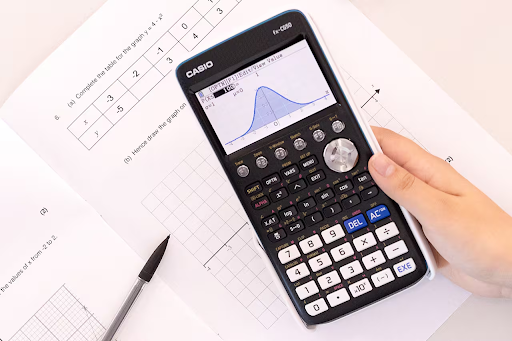
Graphing calculators have revolutionised the way mathematics is taught and learned. They provide students with the capability to visualise complex functions and geometric figures, making abstract ideas tangible and easier to understand. This visual approach not only aids in comprehension but also in retention, supporting a deeper grasp of subject matter.
Enhancing Student Engagement
One significant benefit of graphing calculators is their ability to increase student engagement. Traditional pen-and-paper methods can often be monotonous, especially when dealing with extensive datasets or intricate equations. Graphing calculators, however, offer an interactive alternative. By allowing students to plot functions and manipulate variables in real-time, these tools make learning more dynamic and engaging.
Supporting Diverse Learning Styles
Graphing calculators cater to a variety of learning styles. For visual learners, the graphical display of equations and data provides clarity and aids in understanding. Kinesthetic learners benefit from the hands-on interaction with the device while solving problems. Moreover, auditory learners can use built-in features that read out information, further supporting accessibility in learning.
Applications Across Curricula
While primarily associated with mathematics, the utility of graphing calculators extends beyond this subject. In physics, students can graphically represent motion, velocities, and forces, which enriches their understanding of these concepts. Chemistry students can utilise the calculators to handle calculations involved in stoichiometry and reactions. Thus, graphing calculators foster interdisciplinary learning by bridging concepts across various fields of study.
Preparing Students for Technological Proficiency
In an increasingly digital world, equipping students with technological proficiency is crucial. Graphing calculators instil essential skills that are transferable beyond the classroom. As students navigate complex functionalities, they develop critical problem-solving and analytical skills. Furthermore, familiarity with technology prepares them for future academic and professional challenges, where such tools are commonplace.
Reducing Mathematical Anxiety
Mathematical anxiety is a common issue among students, often stemming from the pressure to achieve accuracy quickly. Graphing calculators alleviate this pressure by providing instant feedback, allowing students to explore solutions without the fear of immediate failure. This supportive environment encourages learning at an individual pace, ultimately reducing anxiety and building confidence.
Facilitating Advanced Learning
For advanced students, graphing calculators offer opportunities to delve deeper into mathematical theories. These devices support complex calculus operations, matrix algebra, and statistical functions. As students become adept with graphing calculators, they gain independence, allowing educators to focus on facilitating rather than instructing every step of problem-solving processes.
The Future of Graphing Calculators in Education
As educational paradigms shift towards digital integration, graphing calculators will continue to evolve, incorporating features such as touchscreen interfaces and wireless connectivity. These advances will further integrate these tools into broader educational frameworks, promoting seamless learning experiences that align with contemporary technological trends.
Conclusion
Graphing calculators stand as a testament to the transformative power of technology in the educational sphere. By enabling interactive, engaging, and comprehensive learning experiences, they play a crucial role in cultivating a deeper understanding of mathematics and other scientific disciplines. As educators continue to unlock the full potential of these tools, students are better prepared to navigate the complexities of modern education and the challenges of the future.