
The trading industry is filled with platforms promising deeper market insight, faster execution, and a clearer understanding of price movement. Yet many traders find themselves overwhelmed by endless indicators, complex dashboards, and expensive subscriptions that add little value to their actual decision-making process.
Order flow trading has gained significant attention because it focuses on what is happening inside the market rather than simply reacting to completed price movements. Instead of relying exclusively on traditional technical indicators, traders use order flow tools to analyze buying and selling activity, liquidity, market participation, and execution behavior in real time.
The challenge is not finding order flow tools. The challenge is identifying which ones genuinely improve trading performance. Successful traders understand that effective tools should simplify decision-making, provide actionable information, and help uncover opportunities that are not immediately visible on a standard chart.
Prioritizing Tools That Reveal Real Market Participation
One of the biggest mistakes traders make is choosing software based solely on visual appeal or marketing claims. A tool may look impressive while offering very little practical value during live market conditions.
Professional traders often focus on tools that expose the actions of market participants rather than simply displaying historical price movement. Features that highlight liquidity, aggressive buying and selling, absorption, and volume imbalances can provide valuable insight into the forces driving the market.
Modern order flow analysis relies on more than simple price charts. Traders often look for functionality that includes footprint data, cumulative delta, depth of market information, and volume-based market profiling. The tools featured by Kaizen Daytrading are designed to help traders interpret real-time order activity and understand how institutional participation can influence short-term price behavior.
When comparing platforms, traders should ask a simple question: Does this tool improve my ability to identify meaningful activity from buyers and sellers? If the answer is unclear, the tool may not justify its cost or complexity.
The Importance of Footprint Charts
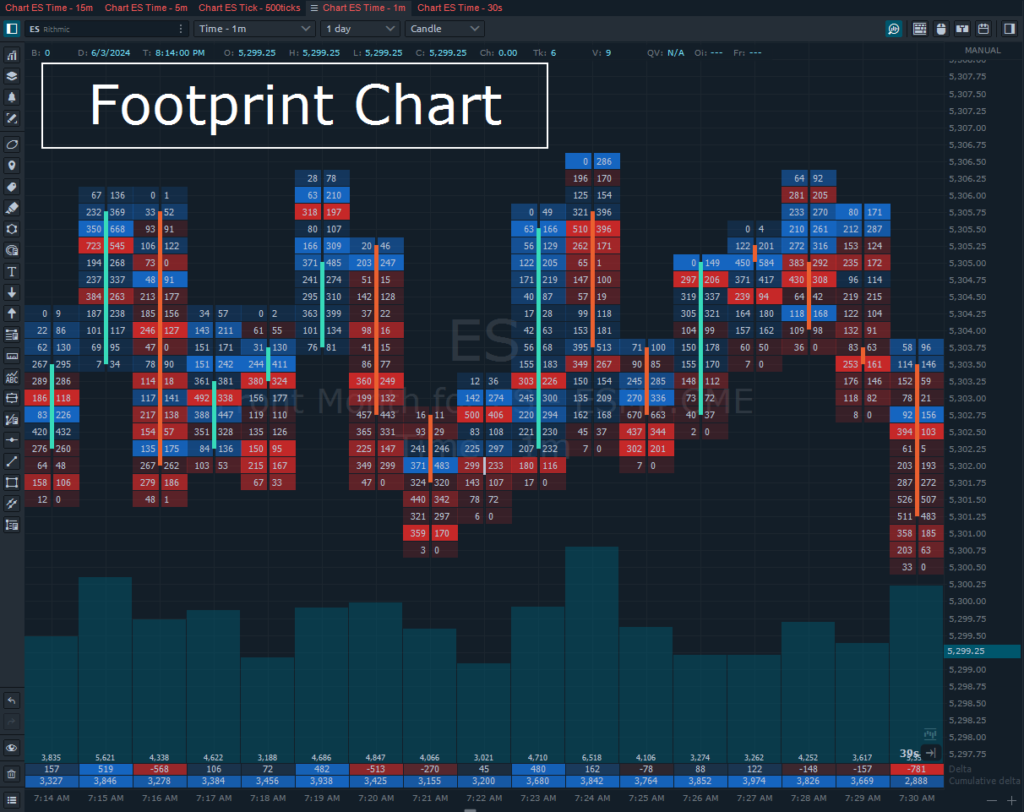
Footprint charts have become one of the most respected tools in modern order flow analysis. Unlike traditional candlestick charts, footprint charts provide detailed information about the volume traded at specific price levels.
This additional layer of information helps traders identify areas where buyers or sellers are becoming aggressive. It also allows them to spot potential reversals, absorption zones, and hidden strength within the market.
The value of footprint charts lies in their ability to reveal details that remain invisible on conventional price charts. A standard candlestick may show a strong upward move, while a footprint chart can reveal whether that move was supported by genuine buying pressure or simply a lack of selling interest.
Traders who learn to interpret these patterns often gain a more nuanced understanding of market behavior and improve their timing during entries and exits.
Depth of Market and Liquidity Analysis
Another essential component of effective order flow trading is the ability to analyze liquidity.
Depth of Market, often referred to as DOM, displays pending buy and sell orders at different price levels. While many traders view the DOM as intimidating at first, it can provide valuable information about potential support, resistance, and market intentions.
Large resting orders can sometimes indicate areas where participants are willing to defend a price level. At other times, these orders may disappear before execution, highlighting the importance of understanding how liquidity behaves in real market conditions.
The most useful tools present this information in a way that is easy to interpret without creating unnecessary distractions. Traders should avoid platforms that overwhelm them with excessive data while failing to highlight actionable opportunities.
Volume Profile as a Market Context Tool
Market context plays a significant role in trading success.
Volume profile tools help traders understand where the majority of trading activity has occurred within a specific period. These areas often represent zones where buyers and sellers have previously agreed on value.
Understanding these regions can help traders identify potential support and resistance levels, anticipate reactions around key price zones, and improve overall trade planning.
Rather than viewing volume profile as a standalone strategy, experienced traders often combine it with other order flow tools to create a more complete picture of market structure.
This combination allows traders to evaluate not only where important levels exist but also how participants behave when price reaches those levels.
Order Imbalances and Aggressive Market Activity
One of the primary objectives of order flow analysis is identifying moments when buyers or sellers take control of the market.
Order imbalance tools help traders recognize situations where one side of the market demonstrates significantly greater aggression than the other. These imbalances can provide early clues about potential directional moves and shifts in momentum.
A strong imbalance does not guarantee future price movement, but it can serve as valuable evidence when combined with other market factors.
The best order flow platforms make these imbalances easy to identify without forcing traders to spend excessive time searching through complex data. Clear visualization and efficient interpretation often matter more than having dozens of additional features.
Avoiding Feature Creep
Trading software companies frequently compete by adding more tools, indicators, and customization options. While additional functionality may appear attractive, excessive complexity can create more problems than solutions.
Many successful traders operate with surprisingly streamlined setups. They focus on a small number of tools they understand deeply rather than constantly searching for new indicators.
Feature creep can lead to analysis paralysis, where traders spend more time interpreting data than executing trades.
Before purchasing any platform, traders should determine whether the available features contribute directly to their trading process. If a feature does not improve analysis, execution, or risk management, it may simply add unnecessary noise.
Execution Quality Matters More Than Most Traders Realize
Even the most sophisticated analysis becomes meaningless if execution quality is poor.
Order flow traders often depend on precise entries and exits. Delays, platform instability, and inefficient order routing can significantly impact results, especially during volatile market conditions.
When evaluating tools, traders should consider factors including platform stability, order management capabilities, customization options, and responsiveness during high-volume periods.
A reliable trading environment allows traders to focus on market behavior rather than worrying about technical issues.
Consistency often produces better long-term outcomes than chasing the newest software release or the latest industry trend.
Building a Complete Trading Framework
No single tool provides every answer.
Successful order flow traders typically combine several complementary resources to build a comprehensive framework for decision-making. Footprint charts, volume profiles, liquidity analysis, and order imbalance tools each provide a unique perspective on market activity.
The goal is not to collect as many tools as possible. The goal is to create a workflow that helps identify opportunities, manage risk, and execute trades with confidence.
Traders who focus on understanding how these tools work together often achieve better results than those who constantly switch between platforms searching for a perfect solution.
Finding What Truly Adds Value
The most effective order flow tools are not necessarily the most expensive or feature-rich. They are the tools that help traders understand market participation, identify meaningful opportunities, and make informed decisions under pressure.
As markets continue to evolve, traders who prioritize clarity, practicality, and execution quality will be better positioned to navigate changing conditions. Rather than chasing every new feature or software trend, focusing on tools that provide genuine insight into buyer and seller behavior can create a stronger foundation for long-term trading success.
Choosing the right order flow tools is ultimately about improving decision-making. When traders focus on actionable information instead of information overload, they place themselves in a much stronger position to succeed.